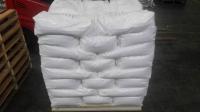


Our Products

Polyacrylamide / The replacement of flopan an945 anionic flocculant|APAM
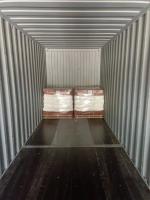
FLOPAM AN945 is an anionic polyacrylamide (APAM) flocculant in SNF’s FLOPAM range. It is primarily used to improve solid-liquid separation, clarification, thickening, settling, and dewatering. Current NSF listings identify FLOPAM AN945 PWG as a polyacrylamide used for flocculation/coagulation, with a listed maximum use of 1 mg/L for the applicable drinking-water treatment certification; several AN945 variants are also listed for well-drilling applications.
SNF describes its FLOPAM AN powder range as anionic powder flocculants designed to enhance solid-liquid separation, clean-water recovery, and solids-stream density.
1. Mining and Mineral Processing
One of the most important applications of FLOPAM AN945 anionic flocculant is mineral processing.
Mining operations produce large volumes of slurry containing finely divided mineral particles. These particles can remain suspended for long periods because of their small size and surface chemistry. AN945 helps aggregate these particles into larger flocs, allowing them to settle more rapidly.
Typical applications include:
- Mineral concentrator thickeners
- Tailings thickening
- Tailings clarification
- Ore washing
- Process-water recovery
- Mineral slurry clarification
- Concentrate thickening
- Tailings dewatering
In a conventional thickener, FLOPAM AN945 can improve settling velocity and promote formation of a denser underflow. The clarified overflow can then be recycled as process water.
This is particularly valuable where water availability is limited because improved clarification allows a greater proportion of process water to be recovered and reused.
2. Tailings Treatment
FLOPAM AN945 is especially suitable for applications involving fine mineral tailings.
Tailings may contain clay, silica, metal hydroxides and other very fine particles that are difficult to settle naturally. Anionic PAM works through polymer adsorption and bridging, connecting multiple particles into larger aggregates.
The resulting flocs can:
- Settle faster
- Produce clearer overflow
- Increase thickener capacity
- Increase underflow solids concentration
- Reduce water retained with tailings
- Improve water recovery
For high-solids tailings, selecting the correct molecular weight and charge density is extremely important. AN945 and AN945 VHM should not be assumed to behave identically, because the VHM grade represents a different molecular-weight performance category.
3. Alumina and Bauxite Processing
A particularly important potential application is bauxite/alumina processing, especially where highly alkaline mineral slurries require clarification.
Bauxite refining by the Bayer process generates red mud, a fine solid residue suspended in strongly alkaline liquor. Efficient settling and washing of red mud are essential to recover caustic-containing liquor and reduce the volume of residue.
Anionic polyacrylamide can be used to:
- Accelerate red-mud settling
- Improve pregnant-liquor clarification
- Increase mud compaction
- Improve counter-current decantation
- Improve washing efficiency
- Reduce liquor losses
- Improve water/liquor recovery
For Bayer-process applications, however, the polymer must be selected specifically for the very high pH and high ionic-strength environment. A normal wastewater-grade APAM should not automatically be substituted for a polymer proven in alumina refining.
4. Industrial Wastewater Treatment
Another major application of FLOPAM AN945 anionic flocculant is industrial wastewater treatment.
Industrial wastewater frequently contains suspended mineral particles, colloids and other solids that do not settle efficiently without chemical assistance.
Potential applications include:
- Steel-plant wastewater
- Mining wastewater
- Coal-washing wastewater
- Chemical wastewater
- Food-processing wastewater
- Paper-mill wastewater
- Metal-finishing wastewater
- General industrial effluent
The polymer can be added after an inorganic coagulant or used as part of a polymer-only treatment process, depending on the wastewater.
A typical treatment sequence is:
Raw wastewater → coagulation → FLOPAM AN945 → flocculation → clarification/DAF → filtration
The objective is to produce larger flocs that can be separated by sedimentation, flotation or filtration.
5. Sludge Dewatering
FLOPAM AN945 can also be evaluated for sludge-conditioning and dewatering applications.
The polymer causes fine particles within sludge to aggregate. A well-formed floc releases water while retaining a relatively strong solid structure.
Possible dewatering equipment includes:
- Belt filter presses
- Centrifuges
- Filter presses
- Screw presses
- Vacuum filters
The correct polymer type is highly dependent on the sludge. Cationic PAM is frequently preferred for biological municipal sludge, whereas anionic PAM can be advantageous for certain inorganic, mineral-rich or industrial sludges.
Therefore, AN945 should be selected based on laboratory testing rather than assuming that every sludge will respond well to an anionic polymer.
6. Coal Washing and Coal Preparation
Coal-processing plants produce wastewater containing fine coal, clay and mineral particles.
These particles can create highly turbid water and require efficient clarification before the water can be recycled.
FLOPAM AN945 can potentially be used in:
- Coal-washing wastewater
- Coal-slurry clarification
- Thickener feed
- Tailings settling
- Process-water recycling
- Fine-coal recovery
The polymer aggregates fine particles into larger flocs, increasing settling velocity and improving overflow clarity.
Better water clarification can allow more water to be recycled to the coal-washing circuit, reducing freshwater consumption.
7. Sand Washing and Aggregate Plants
Another practical application is sand-washing wastewater treatment.
Sand and aggregate washing generates water containing:
- Fine sand
- Silt
- Clay
- Mineral fines
The very fine fraction can remain suspended and create cloudy water.
FLOPAM AN945 can help aggregate these fine particles so they settle in clarifiers or thickeners.
Benefits may include:
- Faster settling.
- Clearer overflow water.
- Higher solids concentration in underflow.
- Better recovery of washing water.
- Reduced freshwater consumption.
- Improved handling of waste solids.
For sand washing, jar testing or settling-column testing is recommended because clay mineralogy can strongly affect polymer performance.
8. Drilling Applications
Interestingly, current NSF listings also identify FLOPAM AN945 PWG and AN945 VHM PWG as well-drilling aids, in addition to their coagulation/flocculation listing.
This means that particular AN945 grades can have applications beyond conventional wastewater treatment.
Depending on the exact grade and formulation, anionic polyacrylamide can be used in drilling-related operations for:
- Solids control
- Drilling-fluid treatment
- Cuttings management
- Drilling wastewater treatment
- Well-development water treatment
The exact grade is important because drilling applications may require different properties from conventional water-treatment flocculation.
9. DAF and Clarification
FLOPAM AN945 may also be used in dissolved-air flotation (DAF) systems when the wastewater chemistry is suitable.
DAF removes suspended solids by attaching air bubbles to particles or flocs and floating them to the surface.
Small particles are difficult to capture efficiently. Polymer flocculation converts them into larger aggregates.
Therefore, AN945 can potentially improve:
- Floc size
- Flotation efficiency
- Suspended-solids removal
- Clarified-water quality
- Sludge capture
It can be particularly useful for industrial wastewater containing mineral solids.
10. Process-Water Recycling
One of the broader benefits of FLOPAM AN945 anionic polyacrylamide is its ability to improve water recovery.
In mining, mineral processing, sand washing and industrial wastewater treatment, the goal is increasingly not simply to remove solids but to recover and recycle water.
By improving solid-liquid separation, AN945 can help produce:
Clearer overflow → recycled process water
while concentrating:
Suspended solids → thickened underflow/tailings
This can reduce freshwater demand and improve overall process efficiency. SNF specifically describes its anionic FLOPAM products as enhancing clean-water reclamation and solids-stream density.
11. FLOPAM AN945 vs. AN945 VHM
It is important not to treat every FLOPAM AN945 grade as identical.
Current NSF listings separately identify:
- FLOPAM AN945 PWG
- FLOPAM AN945 VHM PWG
- FLOPAM AN945 K PWG
- FLOPAM AN945 K VHM PWG
- FLOPAM AN945 K N PWG
- FLOPAM AN945 XD PWG
with different certified applications depending on the grade.
Therefore, when purchasing or replacing AN945, the complete product designation should be checked rather than using only “AN945.”
The VHM grade, for example, is intended for applications where very high molecular weight is advantageous, such as certain high-rate thickening and coarse-tailings applications.
12. Dosage of FLOPAM AN945
There is no universal dosage for FLOPAM AN945.
The optimum dosage depends on:
- Suspended-solids concentration
- Particle size
- Clay content
- Mineralogy
- pH
- Water hardness
- Salinity
- Temperature
- Sludge characteristics
- Mixing intensity
- Required clarification level
For industrial wastewater, mining and tailings applications, dosage should normally be established using a jar test, settling test or pilot thickener test.
Overdosing can sometimes produce excessively large, weak or gelatinous flocs, while underdosing can produce poor settling and high turbidity.
Conclusion
FLOPAM AN945 is an anionic polyacrylamide flocculant primarily used to improve solid-liquid separation. Its important applications include mineral processing, mining tailings, alumina/bauxite processing, industrial wastewater treatment, coal washing, sand washing, sludge dewatering, process-water clarification, DAF and selected drilling applications.
Its greatest commercial value is often in applications where fine suspended solids need to be rapidly converted into dense, settleable flocs, allowing clearer water to be recovered and concentrated solids to be handled more efficiently.
For mining and mineral-processing applications, FLOPAM AN945 is particularly relevant for tailings thickening and process-water recovery. For high-rate thickening or very difficult solids, the appropriate AN945 VHM or another specialized grade may provide better performance.
Most importantly, the exact AN945 grade, molecular weight and charge characteristics should be matched to the specific slurry or wastewater through laboratory testing. Current NSF records confirm AN945 as a polyacrylamide flocculant and list several AN945 variants for coagulation/flocculation and, for certain grades, well-drilling applications.
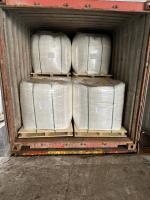
196_small.jpg "Drilling mud chemical PHPA Anionic Polyacrylamide")