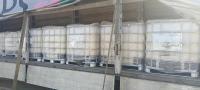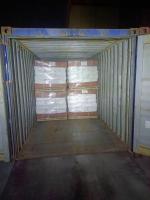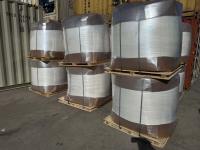


Our Products

Polyacrylamide / The equivalent of magnafloc 156 anionic polyacrylamide used for mining
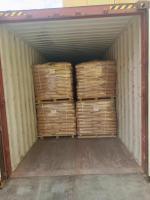
Magnafloc 156 is an anionic polyacrylamide (APAM) flocculant used primarily to improve solid-liquid separation. Its main function is to aggregate fine suspended particles into larger flocs, allowing them to settle, thicken, filter, or otherwise separate from water more efficiently.
The main application of Magnafloc 156 anionic polyacrylamide is industrial solid-liquid separation, particularly in mineral processing, mining, wastewater clarification, sludge treatment, and water recovery. The exact performance depends on the product grade, molecular weight, charge density, water chemistry and process conditions.
1. Mining and Mineral Processing — Main Application
The most important application area for Magnafloc 156 is mining and mineral processing.
Mining operations generate slurries containing very fine mineral particles. These particles may remain suspended for long periods because of their small particle size and surface charge. Magnafloc 156 can adsorb onto the particles and connect them through polymer chains, forming larger flocs.
This improves:
- Particle settling
- Thickener performance
- Overflow clarity
- Underflow density
- Water recovery
- Tailings handling
Typical applications include ore-processing thickeners, mineral tailings clarification, concentrate thickening and process-water recovery.
In a conventional thickener, Magnafloc 156 is generally injected into the feed stream before or within the flocculation zone. The polymer promotes rapid aggregation, after which the flocs settle under gravity.
The resulting clarified water can be returned to the process, while the concentrated solids are discharged as thickened underflow.
2. Mineral Tailings Thickening
Magnafloc 156 anionic polyacrylamide can be particularly useful for tailings treatment.
Tailings contain fine particles of minerals, silica, clay and other materials. If these solids settle slowly, the clarification process becomes inefficient and large quantities of water remain trapped in the tailings.
Using an appropriate APAM can produce larger and denser flocs.
Potential benefits include:
- Faster tailings settling
- Clearer overflow
- Higher underflow solids concentration
- Better water recovery
- Lower suspended solids in recycled water
- Improved thickener capacity
This is especially important for modern mining operations that aim to maximize water recycling.
3. Industrial Wastewater Clarification
A second major application is industrial wastewater treatment.
Industrial wastewater can contain large quantities of suspended solids and colloidal material. Magnafloc 156 can promote aggregation and make these contaminants easier to remove.
Potential industries include:
- Mining
- Steel
- Metal processing
- Chemical manufacturing
- Paper and pulp
- Food processing
- Aggregate processing
- Coal washing
A typical treatment process is:
Raw wastewater → coagulation → Magnafloc 156 → flocculation → sedimentation → filtration
Magnafloc 156 may be used alone when particle characteristics are favorable or together with inorganic coagulants such as PAC, aluminum sulfate or ferric chloride.
4. Sand Washing and Aggregate Processing
Another important application of Magnafloc 156 is sand-washing wastewater treatment.
Sand and aggregate plants generate wastewater containing fine sand, silt, clay and mineral particles. Fine particles can remain suspended and cause high turbidity.
Anionic polyacrylamide can aggregate these particles into larger flocs, allowing them to settle rapidly in a thickener or settling tank.
The main benefits are:
- Faster settling
- Clearer overflow water
- Higher solids concentration
- Improved water recycling
- Lower freshwater consumption
For sand-washing plants, polymer selection is particularly dependent on the clay content and mineralogy. Therefore, a jar test should be conducted before establishing the final dosage.
5. Coal Washing
Magnafloc 156 can also be evaluated for coal-washing wastewater and coal-slurry clarification.
Coal preparation generates water containing fine coal, clay and mineral matter. These fine solids can be difficult to separate by gravity alone.
Anionic polyacrylamide can improve:
- Coal-slurry settling
- Thickener performance
- Fine-solid recovery
- Tailings clarification
- Process-water recycling
The objective is normally to produce cleaner overflow and more concentrated underflow.
6. Sludge Thickening and Dewatering
Magnafloc 156 can also be considered for sludge conditioning, particularly for mineral-rich or inorganic industrial sludge.
The polymer promotes aggregation of fine particles and can improve water release during mechanical separation.
Potential equipment includes:
- Belt filter presses
- Centrifuges
- Filter presses
- Screw presses
- Gravity thickeners
However, anionic polyacrylamide is not automatically the best polymer for every sludge. Municipal biological sludge frequently responds better to cationic PAM because biological solids often have predominantly negative surface charges.
For inorganic and mineral-based sludge, anionic PAM can be more appropriate.
7. Water Clarification
Another application of Magnafloc 156 is water clarification.
When water contains fine suspended particles that do not settle naturally, anionic PAM can accelerate their aggregation.
The mechanism can be simplified as:
Fine particles → polymer adsorption → particle bridging → larger flocs → faster settling
This can reduce:
- Turbidity
- Suspended solids
- Fine mineral particles
Where potable water is involved, the exact Magnafloc grade must be checked for the appropriate regulatory certification. An industrial-grade polymer should not automatically be used in drinking-water treatment.
8. Process-Water Recycling
One of the most economically important functions of Magnafloc 156 anionic polyacrylamide is improving process-water recovery.
This is particularly important in:
- Mining
- Mineral processing
- Sand washing
- Coal preparation
- Industrial wastewater treatment
The polymer helps separate:
Solids → concentrated underflow
from:
Water → clarified overflow
The clarified water can potentially be recycled to the production process. This reduces freshwater demand and can lower the volume of wastewater requiring discharge.
9. Why Anionic Polyacrylamide Works
Magnafloc 156 functions primarily through adsorption and polymer bridging.
The long polymer chains can attach to multiple particles simultaneously. One polymer molecule can therefore connect several fine particles, producing a larger aggregate.
The effectiveness depends on:
- Molecular weight
- Anionic charge density
- Particle surface chemistry
- Particle size
- pH
- Ionic strength
- Water hardness
- Mixing intensity
- Polymer dosage
This explains why the same polymer can perform very well in one mineral slurry but poorly in another.
10. Dosage and Preparation
There is no universal Magnafloc 156 dosage.
The optimum dosage should be established through jar testing, settling tests or pilot-scale trials.
Important factors include:
- Suspended-solids concentration
- Particle size
- Clay content
- pH
- Temperature
- Water chemistry
- Required settling rate
- Desired underflow concentration
The polymer should normally be properly dispersed and hydrated before dosing. Excessive shear can damage polymer chains and reduce performance.
Overdosing can also cause problems, including poor floc structure, increased residual polymer and higher operating costs.
11. Magnafloc 156 Compared with Other APAM Grades
It is important to understand that Magnafloc 156 should not be selected solely by product name.
Different Magnafloc anionic grades can have different:
- Molecular weights
- Charge densities
- Viscosities
- Dissolution characteristics
- Flocculation speeds
- Shear resistance
For a mining thickener, a high-molecular-weight grade may be preferable when large, dense flocs are required. For certain wastewater clarification applications, a lower molecular weight or different charge density can perform better.
Therefore, Magnafloc 156 should be compared with alternative grades based on actual technical specifications and treatment performance, not simply on brand equivalence.
Conclusion
The main application of Magnafloc 156 anionic polyacrylamide is solid-liquid separation, with particularly strong relevance to mining and mineral processing.
Its major applications include:
- Mineral tailings thickening
- Mining wastewater clarification
- Mineral slurry settling
- Sand-washing wastewater treatment
- Coal-washing wastewater treatment
- Industrial wastewater clarification
- Sludge thickening and dewatering
- Process-water recovery and recycling
Among these, mineral processing and tailings clarification are the key applications to evaluate first when considering Magnafloc 156.
Its primary function is to convert fine suspended particles into larger flocs, producing faster settling, clearer overflow and more concentrated underflow. This makes it especially valuable in thickeners and clarification systems where water recovery is an important objective.
For commercial use, the exact Magnafloc 156 specification, molecular weight and anionic charge density should be confirmed from the current manufacturer TDS. The final dosage should then be determined through jar testing or pilot testing, because polymer performance is highly dependent on the characteristics of the specific wastewater or mineral slurry.