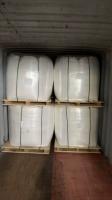
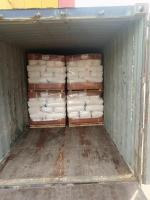
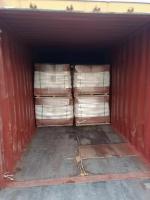
MAGNAFLOC-155 is a high-molecular-weight anionic polyacrylamide flocculant designed for solid–liquid separation across a wide range of industrial, municipal, and mining processes. As part of the well-known MAGNAFLOC polymer series, it is engineered for systems requiring strong particle-bridging power, fast settling, and robust floc formation, especially when dealing with mineral suspensions, tailings, industrial wastewater, and sludge dewatering operations. Because of its high anionic charge and long polymer chains, MAGNAFLOC-155 offers reliable performance in environments with fine particulate matter and high turbidity.
One of the major application areas of MAGNAFLOC-155 is mining and mineral processing, where the polymer is commonly used for thickening, clarification, and tailings management. Mining processes such as ore grinding, flotation, leaching, and beneficiation generate large volumes of slurry containing ultra-fine mineral particles, silica, clay, metal hydroxides, and process chemicals. These particles often remain stable in suspension due to their small size and surface charge. MAGNAFLOC-155 acts as a high-efficiency flocculant that binds these fine particles together into large, compact flocs that settle rapidly. This enhances throughput in thickeners, produces a clearer overflow, and increases the density of the underflow. A denser underflow means lower water loss in tailings disposal and more efficient water recycling back into the processing circuit. Mining operations that handle bauxite, gold, copper, iron ore, coal, phosphate, and rare earth minerals frequently rely on MAGNAFLOC-155 because it handles variable slurry characteristics and high solids concentrations effectively.
In tailings ponds, MAGNAFLOC-155 helps accelerate sedimentation rates, preventing excessive pond expansion and improving environmental compliance. It supports more stable tailings management and reduces risks associated with dam capacity and long-term waste storage. In operations using filtration of tailings or concentrate, the polymer also enhances the filterability of solids by producing flocs that retain their structure under shear.
MAGNAFLOC-155 is also widely applied in industrial wastewater treatment, where the objective is to remove suspended solids, organic residues, and colloidal impurities. Industries such as steel manufacturing, metal finishing, chemical production, pulp-and-paper, petroleum refining, coal washing, textile dyeing, and food processing all generate wastewater with fine sediments that cannot be effectively separated by sedimentation alone. When MAGNAFLOC-155 is added to these wastewater streams, it induces bridging flocculation, creating large particle clusters that settle or float rapidly. This reduces turbidity, improves the clarity of discharge water, and enhances the efficiency of downstream filtration or dissolved-air flotation systems. It is commonly used together with coagulants like ferric chloride, alum, or polyaluminum chloride to destabilize colloids and enhance overall treatment performance. The result is lower chemical consumption, improved consistency of treatment outputs, and reduced sludge production.
Another major application is sludge dewatering, where MAGNAFLOC-155 is used to improve water removal from industrial or municipal sludge. Sludges from biological processes, chemical precipitation, or mining operations often contain considerable moisture and fine solids that resist mechanical separation. MAGNAFLOC-155 builds strong, shear-resistant flocs that allow mechanical dewatering equipment—such as belt filter presses, screw presses, filter presses, and centrifuges—to extract water more efficiently. This results in drier sludge cakes, reduced disposal and transportation costs, and increased dewatering throughput. In large wastewater treatment plants or industrial operations dealing with high sludge volumes, the use of MAGNAFLOC-155 significantly improves operational efficiency and lowers energy usage.
In municipal wastewater treatment, MAGNAFLOC-155 is sometimes used in primary, secondary, or tertiary clarification. Its strong flocculating properties allow it to handle biological solids and organic matter, improving the performance of final clarifiers and reducing suspended solids in effluent discharge. Although other grades of polyacrylamide are often preferred for municipal systems, MAGNAFLOC-155 remains valuable where high-strength or industrial-influenced wastewater is present.
Another important field of application is raw water and surface water clarification. Rivers, lakes, and reservoirs often contain clay, silt, algae, organic contaminants, and weather-driven turbidity variations. MAGNAFLOC-155 can be used to aggregate these fine particles during coagulation–flocculation processes in water treatment plants. This improves settling performance, protects filtration media, and increases the efficiency of potable-water production. Because MAGNAFLOC-155 can operate over a wide pH range, it is suitable for environments with varying water quality.
MAGNAFLOC-155 is also utilized in oil and gas operations, particularly in produced-water treatment, drilling waste management, and enhanced solid–liquid separation in fracking operations. Drilling fluids and produced water often contain fine mineral particles and emulsified contaminants. The polymer helps remove suspended solids, promoting cleaner discharge streams and recovery of usable water for reuse in drilling operations or reinjection systems.
In some specialized applications, MAGNAFLOC-155 assists in soil erosion control, sedimentation of stormwater, and clarification of process water in construction or tunneling projects. Its ability to flocculate fine particles rapidly makes it useful where sediment runoff must be controlled to meet environmental regulations.
Across all these applications, the main reasons industries choose MAGNAFLOC-155 include its high molecular weight, strong anionic charge, shear resistance, rapid settling kinetics, and consistent floc formation. It provides excellent performance even in demanding systems with high solids concentrations or fluctuating process conditions. The polymer is effective at low dosages, which reduces chemical consumption and offers a cost-efficient approach to solid–liquid separation.