

Our Products

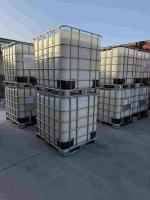
Polyacrylamide / SNF 840 LOB equivalent cationic polyacrylamide emulsion
1. Introduction
SNF 840 LOB is identified in a distributor's product listing as a liquid-emulsion cationic polyacrylamide flocculant. The exact grade name and formulation should be confirmed against the manufacturer's technical data sheet (TDS), because publicly available information on this specific grade is limited. SNF produces cationic polymers for industrial water treatment and solid–liquid separation.
The main potential applications of SNF 840 LOB include wastewater treatment, sludge dewatering, industrial solid–liquid separation, and selected paper, textile, and mineral-processing operations, subject to confirmation of grade suitability.
2. Municipal and Industrial Wastewater Treatment
One of the most important applications of cationic polyacrylamide is wastewater treatment. Municipal sewage and industrial wastewater contain suspended solids, organic matter, colloidal particles, and other impurities that can be difficult to remove by gravity settling alone.
When a suitable cationic polymer is added, its positively charged groups interact with negatively charged particles. The polymer chains also connect multiple particles through bridging, forming larger and stronger flocs.
These flocs can settle more rapidly or be captured more efficiently by filtration and flotation equipment.
Potential wastewater applications include:
-
Municipal sewage treatment plants
-
Food-processing wastewater
-
Chemical manufacturing wastewater
-
Industrial washing water
-
Manufacturing-process wastewater
-
Pretreatment before filtration or further clarification
The actual performance depends on wastewater composition, pH, temperature, suspended-solids concentration, and the presence of other treatment chemicals.
3. Sludge Dewatering
Sludge dewatering is a major application of cationic polyacrylamide.
Wastewater treatment produces biological sludge, primary sludge, and chemically generated sludge. These materials frequently contain a high proportion of water, making transportation and disposal expensive.
A suitable CPAM can aggregate fine sludge particles and improve the release of water during mechanical dewatering.
SNF 840 LOB may be evaluated for use with:
-
Belt filter presses
-
Centrifuges
-
Screw presses
-
Other compatible sludge-dewatering systems
The potential benefits include improved drainage, better filtrate clarity, higher cake solids, and reduced sludge volume.
However, these benefits are not guaranteed for every sludge type. The optimum polymer depends on sludge characteristics and equipment operating conditions. Jar tests and pilot trials should be conducted before selecting a commercial dosage.
4. Paper and Pulp Industry
Cationic polyacrylamide products are used in various papermaking processes, including retention, drainage, and wastewater clarification. SNF's broader product range serves the paper industry, although the suitability of 840 LOB for a particular papermaking function must be verified.
Fiber and fines retention: Positively charged polymer groups can help fine fibers and other suspended materials associate with negatively charged components in the pulp system.
Drainage improvement: Appropriate polymer treatment can help water drain more efficiently from the fiber mat.
Whitewater clarification: In paper mills, wastewater and whitewater may contain fibers, fillers, and other suspended solids. Flocculation can facilitate their removal and water recycling.
The polymer must be carefully selected because excessive dosage can cause oversized flocs, uneven formation, or operational problems. Product compatibility with the mill's existing retention and drainage program should also be assessed.
5. Textile Wastewater Treatment
Textile wastewater may contain dyes, fibers, sizing agents, surfactants, and suspended solids. Some of these materials remain dispersed in water and are difficult to remove through sedimentation alone.
A suitable cationic polyacrylamide can help aggregate suspended particles and dye-bearing colloids, improving subsequent clarification.
Potential uses include:
-
Dyeing and finishing wastewater
-
Textile washing wastewater
-
Fiber-containing effluent
-
Pretreatment before filtration
-
Sludge conditioning before dewatering
The removal of dissolved dyes depends on their chemical structure and the treatment system. CPAM should not be assumed to remove every dissolved colorant effectively by itself. For strongly colored wastewater, a combination of pH adjustment, inorganic coagulants, organic coagulants, and polymer flocculants may be required.
6. Mining and Mineral Processing
Mineral-processing plants generate wastewater and slurries containing fine mineral particles. These particles may remain suspended for long periods, reducing water-recycling efficiency and increasing the water demand of the operation.
Cationic polyacrylamide can be useful in selected solid–liquid separation processes, particularly where the particle surface chemistry is compatible with a positively charged polymer.
Potential applications include:
-
Process-water clarification
-
Fine-particle aggregation
-
Mineral-washing wastewater treatment
-
Selected tailings-water clarification processes
-
Sludge conditioning and dewatering
Nevertheless, many mineral suspensions respond better to anionic polyacrylamide, nonionic polyacrylamide, or specialty flocculants. The choice depends on mineral type, particle size, water chemistry, and the charge of the suspended solids. SNF 840 LOB should therefore be tested rather than assumed to be suitable for all mining applications.
7. Food Processing and Other Industrial Effluents
Food-processing wastewater can contain suspended organic matter, fats, proteins, and fine particles. A suitable cationic flocculant may assist with the removal of suspended solids and improve downstream clarification or flotation.
Other potential applications include wastewater from beverage production, industrial cleaning, and selected manufacturing operations.
For food-related applications, the polymer must meet the applicable regulatory requirements for the intended use. A product suitable for industrial wastewater treatment is not automatically approved for drinking-water treatment or direct food-contact applications.
8. How to Use Cationic Polyacrylamide Effectively
To obtain reliable results, the polymer should be tested under representative operating conditions.
A practical evaluation procedure is:
-
Collect a representative wastewater or sludge sample.
-
Prepare the polymer according to its specific product instructions.
-
Conduct jar tests at several dosages.
-
Compare floc size, settling speed, supernatant clarity, and resistance to shear.
-
For sludge, measure drainage rate, filtrate quality, and cake solids.
-
Confirm the best dosage in a pilot or full-scale trial.
The dosage should be optimized rather than simply increased. Overdosing may increase operating costs and can impair separation performance.
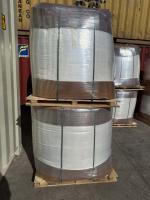
Because 840 LOB is described as an emulsion grade in secondary listings, its handling and preparation requirements should be confirmed with the supplier. SNF's general documentation explains that polymer physical form affects preparation, dissolution, and handling requirements.
SNF 840 LOB cationic polyacrylamide is a grade worth evaluating for wastewater flocculation, sludge dewatering, and selected industrial solid–liquid separation processes. Cationic polymers can improve particle aggregation, clarification, and water removal when their charge characteristics and molecular properties match the material being treated.
For commercial selection, the most important factors are polymer charge, molecular weight, active content, viscosity, preparation conditions, and performance in the actual process.
Important: The applications described above are based on the general performance of cationic polyacrylamide and the broader SNF product range. They should not be interpreted as a verified, exclusive application list for SNF 840 LOB. Obtain the exact grade's TDS and SDS before finalizing a recommendation or claiming a specific performance benefit.
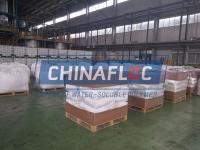
169_small.jpg "Chinafloc Cationic Polyacrylamide used for wastewater treatment")