


Our Products

coagulant / PolyDADMAC(NSF certificate) for drinking water turbidity removal
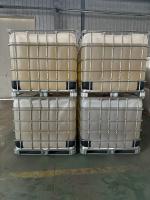
412_small.jpg "PolyDADMAC(NSF certificate) for drinking water turbidity removal")
PolyDADMAC for Drinking Water Turbidity Removal
PolyDADMAC, or polydiallyldimethylammonium chloride, is a water-soluble cationic polymer widely used as a coagulant and flocculation aid in water treatment. PolyDADMAC for drinking water turbidity removal is particularly useful when raw water contains suspended solids, colloidal particles, organic matter, algae, and other negatively charged impurities that are difficult to remove by simple sedimentation or filtration. Because PolyDADMAC has a strong positive charge, it can rapidly neutralize negatively charged particles and promote the formation of larger aggregates that can be removed by sedimentation, clarification, flotation, or filtration.
How PolyDADMAC Removes Turbidity
The main mechanism of PolyDADMAC for drinking water turbidity removal is charge neutralization. Most clay particles, colloids, natural organic matter, and fine suspended solids in surface water carry a negative surface charge. These particles repel one another and therefore remain dispersed in water for long periods.
When PolyDADMAC is added, its positively charged polymer chains are attracted to the negatively charged particle surfaces. The polymer reduces or neutralizes the electrostatic repulsion between particles. Once the particles become destabilized, they can collide and aggregate into larger particles.
The resulting aggregates, commonly called microflocs or flocs, are easier to separate from water. Depending on the treatment process, these flocs can be removed through sedimentation, dissolved air flotation, multimedia filtration, or other clarification technologies.
This makes PolyDADMAC for drinking water turbidity removal especially valuable for raw water containing fine colloidal particles that are poorly removed by conventional settling alone.
Advantages of PolyDADMAC in Drinking Water Treatment
One important advantage of PolyDADMAC is its relatively high cationic charge density. A comparatively small quantity can therefore produce significant particle destabilization.
PolyDADMAC for drinking water turbidity removal can provide several benefits:
- Rapid charge neutralization
- Efficient destabilization of colloidal particles
- Improved formation of settleable flocs
- Reduced residual turbidity
- Potential reduction in inorganic coagulant consumption
- Improved clarification efficiency
- Better filtration performance
- Reduced sludge volume in some treatment systems
- Effective performance over a relatively broad range of operating conditions
PolyDADMAC can also be used as a primary coagulant or as a coagulant aid. In some plants, it is combined with aluminum sulfate, polyaluminum chloride (PAC), ferric chloride, or other inorganic coagulants.
PolyDADMAC as a Primary Coagulant
Depending on the raw-water characteristics, PolyDADMAC can sometimes function as the principal coagulant. This is particularly applicable when the main treatment problem is the destabilization of negatively charged colloids.
For example, raw surface water may contain clay, silt, organic colloids, and fine suspended particles. Adding PolyDADMAC can neutralize the particle charge and allow rapid aggregation.
However, PolyDADMAC should not automatically replace PAC or aluminum sulfate in every drinking-water application. The optimum treatment chemistry depends on turbidity, alkalinity, pH, temperature, dissolved organic carbon, particle concentration, particle charge, and other raw-water characteristics.
Therefore, jar testing is normally required to determine whether PolyDADMAC should be used alone or together with an inorganic coagulant.
PolyDADMAC Combined with PAC
A common approach is to combine PolyDADMAC with polyaluminum chloride (PAC). The two products can perform complementary functions.
PAC provides aluminum-based coagulation and can generate hydroxide precipitates that help capture suspended particles. PolyDADMAC provides strong cationic charge neutralization and can accelerate the destabilization of colloids.
In this type of treatment system, PolyDADMAC may be dosed before PAC, together with PAC, or under another sequence determined by jar testing. The correct sequence depends on the raw-water chemistry and the characteristics of the particular PolyDADMAC product.
The combined system can sometimes produce stronger and faster-forming flocs, resulting in improved clarification and lower turbidity after sedimentation.
Typical Application Process
A typical drinking-water clarification process using PolyDADMAC may include the following stages:
Raw water → PolyDADMAC dosing → rapid mixing → coagulation/flocculation → sedimentation or flotation → filtration → disinfection → finished water
PolyDADMAC is normally introduced upstream of the main clarification stage. Rapid and uniform dispersion is important because the polymer needs to contact the suspended and colloidal particles efficiently.
After rapid mixing, the water enters a slower mixing or flocculation stage. During this stage, destabilized particles collide and form larger flocs. Excessive mixing should be avoided because strong shear can break the developing flocs.
The water then passes through a clarifier, sedimentation tank, or dissolved-air flotation unit. Finally, filtration provides additional removal of fine particles and residual turbidity.
PolyDADMAC Dosage
There is no single universal dosage for PolyDADMAC for drinking water turbidity removal. The optimum dosage can vary substantially according to raw-water quality.
As a preliminary starting point, a drinking-water treatment trial might evaluate approximately 0.5–10 mg/L of commercial PolyDADMAC product, with the actual optimum potentially outside this range depending on water chemistry and product concentration.
The dosage should always be established through laboratory jar testing and, where appropriate, pilot testing.
Important factors affecting dosage include:
- Raw-water turbidity
- Suspended-solids concentration
- Particle size
- Zeta potential
- pH
- Alkalinity
- Temperature
- Natural organic matter
- Algae concentration
- Existing coagulant dosage
- PolyDADMAC charge density
- PolyDADMAC molecular weight
- Active-polymer concentration
Overdosing PolyDADMAC can be counterproductive. Excess cationic polymer may cause charge reversal, restabilization of particles, poor floc formation, or increased residual polymer concerns. Consequently, more polymer does not necessarily mean better turbidity removal.
Effect of Molecular Weight and Charge Density
The performance of PolyDADMAC for drinking water turbidity removal is strongly influenced by polymer characteristics.
For charge-neutralization applications, relatively high charge density is often important because the polymer needs to interact efficiently with negatively charged colloidal particles. Molecular weight affects polymer chain behavior, adsorption, and floc structure.
A lower- to medium-molecular-weight, highly cationic PolyDADMAC may be particularly effective when the primary objective is rapid charge neutralization. Higher molecular weight products may provide additional bridging and floc-strength benefits under appropriate conditions.
However, product selection should be based on actual water-treatment testing rather than molecular weight alone.
Application with Aluminum Sulfate
PolyDADMAC can also be combined with aluminum sulfate, commonly known as alum. Alum is a traditional drinking-water coagulant and is effective for many types of raw water.
PolyDADMAC can help destabilize colloids before or during alum coagulation. This may improve the formation and settling characteristics of aluminum-based flocs.
In some systems, the use of a cationic polymer can allow the plant to reduce the required inorganic coagulant dosage. Nevertheless, this should be demonstrated through jar testing because reducing alum too aggressively may negatively affect turbidity removal, organic-matter removal, or finished-water stability.
Drinking-Water Safety Considerations
The most important consideration when using PolyDADMAC for drinking water turbidity removal is that the selected product must be suitable and approved for potable-water treatment in the relevant jurisdiction.
Not every commercial PolyDADMAC product is appropriate for drinking water. The treatment plant should select a grade manufactured for potable-water applications and verify compliance with applicable drinking-water requirements, product specifications, impurity limits, and certification requirements.
The polymer should also be handled according to the manufacturer's safety and dosing instructions. Residual polymer levels should be controlled through proper dosage optimization and process monitoring.
Conclusion
PolyDADMAC for drinking water turbidity removal is an effective cationic polymer technology for destabilizing negatively charged suspended and colloidal particles. Its principal function is charge neutralization, which promotes rapid particle aggregation and improves subsequent clarification and filtration.
PolyDADMAC can be used alone in suitable raw-water conditions or combined with PAC, aluminum sulfate, ferric coagulants, and other treatment chemicals. Its effectiveness depends strongly on charge density, molecular weight, dosage, raw-water chemistry, mixing conditions, and downstream separation technology.
For practical drinking-water treatment, the best approach is to conduct jar testing using the actual raw water and compare several PolyDADMAC grades and dosages. The objective should be to achieve the lowest stable finished-water turbidity while avoiding overdosing and maintaining compliance with all applicable potable-water requirements.
127_small.jpg "The equivalent of CLARIFLOC C-4408 CLARIFLOC C-4410 and CLARIFLOC C-4411")
733_small.jpg "polyDADMAC flocculant for industrial effluent clarification")