


Our Products

Polyacrylamide / NSF Certified anionic Polyacrylamides used for sugar clarification
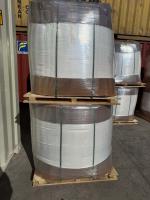
NSF Certified anionic polyacrylamide (APAM) is a high-performance, water-soluble flocculant widely used in sugar manufacturing processes for clarification of cane juice, beet juice, and refinery liquors. The NSF certification (typically NSF/ANSI 60) confirms that the polymer meets strict safety requirements for use in potable and food-related water systems, ensuring that residual monomer content, impurities, and toxicity levels remain within acceptable regulatory limits. This makes NSF certified APAM particularly suitable for sugar production, where the process stream is directly or indirectly related to food-grade products.
In sugar processing, clarification is a critical stage that determines the efficiency of downstream evaporation, crystallization, and centrifugation. Raw juice extracted from sugar cane or sugar beets contains suspended solids, colloidal particles, organic non-sugars, proteins, waxes, fibers, and fine soil particles. These impurities must be removed to achieve high purity juice with low turbidity and improved color quality. NSF certified anionic polyacrylamide plays a key role as a flocculation aid in this purification process.
1. Role in Cane Sugar Juice Clarification
In cane sugar mills, raw juice is typically treated with lime and heat to destabilize impurities and adjust pH. However, lime treatment alone is not sufficient to achieve fast and efficient sedimentation of fine particles. NSF certified anionic polyacrylamide is added after liming and heating stages to enhance floc formation.
The polymer functions through a bridging mechanism. Its long-chain structure adsorbs onto multiple suspended particles, connecting them into larger aggregates. These larger flocs settle rapidly in clarifiers, producing a clearer supernatant juice and a more compact mud layer.
Key benefits include:
- Faster sedimentation rate in clarifiers
- Improved clarity of clarified juice
- Reduced turbidity and suspended solids
- Lower carryover of impurities to evaporators
- Improved mud settling characteristics
By improving clarification efficiency, APAM helps reduce sugar losses in the mud and increases overall extraction yield.
2. Application in Beet Sugar Processing
In beet sugar factories, the raw juice contains high levels of pectins, proteins, and organic colloids that are difficult to remove. The standard purification process involves carbonation or phosphatation, where calcium carbonate or calcium phosphate precipitates impurities.
NSF certified anionic polyacrylamide enhances the performance of these processes by promoting rapid aggregation of fine precipitates. It improves the formation of dense flocs that can be efficiently separated in clarifiers and filtration systems.
In beet processing, APAM provides:
- Improved removal of non-sugars and colloids
- Enhanced filterability of mud and sludge
- Reduced color formation in clarified juice
- More stable operation of continuous clarifiers
- Better downstream evaporation efficiency
The use of APAM helps stabilize the clarification system, particularly when beet quality varies seasonally.
3. Enhancement of Mud Settling and Compaction
One of the most important applications of NSF certified anionic polyacrylamide in sugar clarification is improving mud settling behavior. Sugar mud contains fine inorganic particles, organic residues, and precipitated impurities that are difficult to dewater naturally.
APAM increases floc size and density, resulting in faster settling velocities and improved mud compaction. This leads to a clearer overflow and a more concentrated underflow, which is easier to handle in vacuum filtration or centrifugation systems.
Operational benefits include:
- Increased clarifier throughput
- Reduced residence time in clarification tanks
- Higher mud solids concentration
- Lower moisture content in filter cake
- Reduced energy consumption in downstream handling
Improved mud compaction also reduces sugar loss in the waste stream, which is economically significant in large-scale sugar production.
4. Filtration and Vacuum Filter Performance
After clarification, sugar mud is often processed through rotary vacuum filters or pressure filters to recover residual sucrose and remove remaining solids. NSF certified anionic polyacrylamide improves filtration performance by forming permeable but stable flocs.
These flocs allow water to pass through while retaining solids, increasing filtration rate and reducing clogging. As a result, filter cloth life is extended and maintenance frequency is reduced.
Key improvements include:
- Higher filtration rates
- Improved cake formation and release
- Reduced filter medium fouling
- Better sugar recovery from mud
- Lower wash water consumption
This contributes directly to improved plant efficiency and reduced operational costs.
5. Reduction of Sugar Losses
A major concern in sugar manufacturing is the loss of sucrose trapped in mud and sludge. Fine suspended particles can retain significant amounts of dissolved sugar, leading to economic loss if not properly recovered.
NSF certified anionic polyacrylamide reduces these losses by promoting efficient separation of solids and liquid phases. Clearer juice and more compact mud allow for better sugar extraction during washing and filtration stages.
Benefits include:
- Lower sucrose loss in clarification mud
- Improved overall sugar yield
- Higher purity of clarified juice
- More efficient recovery of dissolved sugars
Even small improvements in clarification efficiency can translate into significant production gains at industrial scale.
6. Color Reduction and Juice Quality Improvement
Color formation in sugar juice is caused by natural plant pigments, degradation products, and organic impurities. High color levels increase refining costs and reduce product quality.
NSF certified anionic polyacrylamide assists in removing color-forming substances by co-precipitating colloidal organic matter with lime or carbonation solids. This results in a lighter-colored clarified juice and reduces the load on downstream decolorization processes such as activated carbon or ion exchange.
Key outcomes include:
- Reduced juice color index
- Improved crystallization performance
- Lower chemical demand in refining stages
- Higher quality white sugar production
7. Stability in Process Variations
Sugar production is subject to variations in raw material quality, including seasonal changes in cane or beet composition. These variations can affect juice viscosity, impurity load, and settling behavior.
NSF certified anionic polyacrylamide provides process stability by ensuring consistent floc formation under different operating conditions. It is effective across a range of pH and temperature conditions typically encountered in sugar mills.
This stability results in:
- More predictable clarification performance
- Reduced process upsets
- Easier operational control
- Improved plant reliability
8. Compatibility with Food-Grade Standards
The NSF certification is particularly important in sugar processing because the clarified juice ultimately becomes food-grade sugar. NSF certified anionic polyacrylamide ensures compliance with strict regulatory requirements for indirect food additives.
This guarantees:
- Low residual monomer content (e.g., acrylamide limits)
- Controlled impurity profile
- Safe use in food-related processing environments
- Compliance with international safety standards
As a result, manufacturers can use APAM without compromising product safety or regulatory compliance.
Conclusion
NSF certified anionic polyacrylamide is a critical process aid in sugar clarification systems for both cane and beet sugar production. It enhances floc formation, accelerates sedimentation, improves mud compaction, increases filtration efficiency, reduces sugar losses, and improves juice clarity and color quality. Its role in stabilizing process performance under variable raw material conditions further strengthens its importance in industrial sugar manufacturing. Because it meets stringent NSF safety requirements, it is fully suitable for applications involving food-grade sugar production, making it an essential chemical in modern sugar refinery operations.
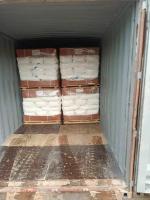
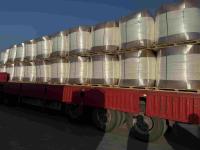
985_small.jpg "Anionic polyacrylamide for marble and granite muds")