In alumina refineries operating under the Bayer process, secondary thickeners and washer thickeners are essential units within the red-mud handling and washing circuit. These stages follow the primary settlers and play a critical role in further separating fine solids from process liquor, improving washing efficiency, and stabilizing downstream residue management. Anionic polyacrylamide (A-PAM) is a key flocculant used in these thickeners to achieve efficient, reliable, and high-capacity solid–liquid separation under harsh alkaline conditions.
1. Role of Secondary and Washer Thickeners
Secondary thickeners are typically used after primary settlers to polish the separation of red mud and recover additional suspended solids from the overflow or underflow streams. Washer thickeners, often arranged in series as part of the CCD washing circuit, are designed to displace entrained sodium aluminate liquor and caustic soda from the red mud using wash water. Both types of thickeners require rapid settling, clear overflow, and dense underflow to function efficiently. Without effective flocculation, these objectives cannot be achieved due to the ultra-fine nature of red mud particles.
2. Challenges in Secondary and Washer Thickening
Red mud entering secondary and washer thickeners typically contains finer particles than those handled in primary settlers. These particles are often below 5 microns, highly charged, and suspended in liquor with very high pH and dissolved solids content. The washing process also introduces dilution and shear forces that can destabilize flocs. These factors make solid–liquid separation more difficult and demand a flocculant with strong bridging capability, high molecular weight, and excellent chemical stability—characteristics provided by anionic polyacrylamide.
3. Flocculation Mechanism of Anionic Polyacrylamide
When anionic polyacrylamide is added to the feed of secondary or washer thickeners, its long polymer chains adsorb onto multiple red-mud particles simultaneously. This creates polymer bridges that bind particles together into large, robust flocs. These flocs have higher mass and settle much faster than individual particles. The anionic charge of the polymer is well suited to the surface chemistry of red mud in alkaline environments, ensuring strong adsorption and effective floc formation.
4. Improvement of Settling Rate and Thickener Throughput
One of the primary applications of anionic polyacrylamide in secondary and washer thickeners is to significantly increase settling velocity. Faster settling allows thickeners to operate at higher feed rates while maintaining stable mud beds and clear overflow. This increased throughput is critical for modern high-capacity alumina refineries, where bottlenecks in washing circuits can limit overall plant production.
5. Enhancement of Overflow Clarity
Clear overflow liquor from secondary and washer thickeners is essential for effective wash-water recycling and for protecting downstream equipment. Anionic polyacrylamide captures ultra-fine suspended solids that would otherwise remain in the liquor, producing low-turbidity overflow. Improved clarity reduces scaling, fouling, and abrasion in pumps, heat exchangers, and pipelines, and improves the overall reliability of the washing circuit.
6. Increase of Underflow Density and Mud Compaction
In washer thickeners, anionic polyacrylamide promotes the formation of compact, compressible mud beds. These beds release water efficiently under compression, resulting in higher underflow solids concentration. Dense underflow reduces the volume of slurry transferred between washing stages and lowers the final volume of red mud sent to disposal. This not only reduces pumping energy but also improves the stability and safety of residue storage facilities.
7. Improvement of Washing Efficiency and Soda Recovery
Effective flocculation enhances the displacement of entrained liquor during washing. Well-structured flocs allow wash water to percolate upward through the mud bed while pushing residual sodium aluminate liquor downward. This improves mass transfer and washing efficiency, leading to lower caustic soda and alumina losses in the residue. Reduced soda loss directly translates into significant cost savings and improved process efficiency.
8. Stability Under Shear and Process Variations
Secondary and washer thickeners experience varying levels of shear due to feed dilution, raking, and slurry pumping. Anionic polyacrylamide used in these applications is designed to produce flocs that resist breakage under moderate shear and reform quickly if disrupted. This ensures consistent thickener performance even during fluctuations in feed solids concentration, temperature, or liquor chemistry.
9. Support for Environmental and Operational Performance
By improving washing efficiency and increasing underflow density, anionic polyacrylamide helps reduce the alkalinity and moisture content of disposed red mud. This supports environmental compliance by lowering the risk of caustic seepage and reducing the footprint of residue disposal areas. Operationally, stable thickener performance reduces downtime, minimizes rake torque issues, and improves overall plant reliability.
10. Summary and Conclusion
The application of anionic polyacrylamide in secondary thickeners and washer thickeners is essential for achieving efficient red-mud separation and washing in alumina plants. Its key benefits include:
-
Rapid settling of fine red-mud particles
-
High thickener throughput and stable operation
-
Clear overflow liquor for effective recycling
-
High-density underflow and reduced residue volume
-
Improved soda and alumina recovery
In conclusion, anionic polyacrylamide is a critical enabler of efficient, economical, and environmentally responsible operation of secondary and washer thickeners in aluminum refining. Without it, modern high-capacity washing circuits would struggle to meet performance, recovery, and sustainability targets.

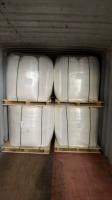



847_small.jpg "the replacement of PRAESTOL 2640 anionic polyacrylamide from Chinafloc")
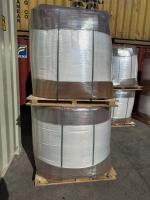
559_small.jpg "high viscossity of anionic polyacrylamide(A2520) used for construction bored pile")