

Our Products

Polyacrylamide / the equivalent of Magnafloc 155 anionic polyacrylamide A1217
1. Introduction to Magnafloc 155
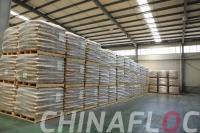
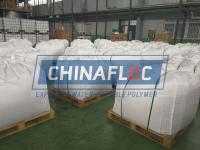
Magnafloc 155 is an anionic polyacrylamide (APAM) flocculant used for solid-liquid separation in industrial processes. Historical technical information identifies it as a copolymer of acrylamide and acrylic acid, supplied as an off-white granular powder with high molecular weight and anionic charge. Its principal function is to condition suspended solids before mechanical or gravity separation
The Magnafloc product family includes flocculants designed for different mining, mineral processing, clarification, thickening, and filtration requirements. The range offers different molecular weights and ionic characteristics to suit different process conditions.
Magnafloc 155 works mainly through polymer bridging. Its long polymer chains adsorb onto suspended particles and connect them into larger aggregates called flocs. These flocs can settle faster, improve the clarity of treated water, and make solid-liquid separation more efficient.
The following sections describe the main industrial applications of Magnafloc 155, including mining, mineral processing, wastewater treatment, coal washing, metallurgy, alumina refining, and sludge management.
2. Magnafloc 155 for Mining and Mineral Processin
Mining and mineral processing are important application areas for anionic polyacrylamide flocculants. Ore crushing, grinding, flotation, and beneficiation generate large quantities of fine mineral particles that remain suspended in process water.
Magnafloc 155 can be used to improve the settling of suitable mineral suspensions and support efficient solid-liquid separation.
Its main applications include:
-
Mineral slurry thickening.
-
Tailings settling and water recovery.
-
Clarification of recycled process water.
-
Concentrate thickening and filtration.
-
Fine mineral particle separation.
-
Wastewater treatment at mineral processing plants.
When Magnafloc 155 is added to a suitable mineral slurry, its polymer chains can bridge fine particles into larger flocs. These flocs settle more rapidly than individual particles, allowing thickeners to produce clearer overflow water and more concentrated underflow.
Improved water recovery is particularly valuable in regions where mining operations face water shortages or high water treatment costs. Recovered water may be returned to suitable processing stages after its quality has been checked.
The optimum grade depends on mineralogy, particle size, slurry density, pH, dissolved salts, and the presence of other process chemicals. Therefore, laboratory settling tests are essential before selecting Magnafloc 155 for a specific ore.
3. Magnafloc 155 for Tailings Thickening and Water Recovery
Tailings management is a major challenge in mining operations. After valuable minerals are recovered, the remaining slurry contains fine mineral particles and a large volume of water. Efficient thickening helps recover process water and reduces the volume of material requiring storage.
Magnafloc 155 can be evaluated for tailings thickening when its molecular weight and anionic charge are suitable for the slurry.
The main benefits may include:
-
Faster settling of fine tailings particles.
-
Improved overflow clarity.
-
Increased underflow solids concentration.
-
Better recovery of water for reuse.
-
Reduced hydraulic loading on downstream equipment.
In a thickener, the flocculant is normally added to a well-controlled feed stream. Appropriate mixing allows the polymer to contact suspended particles without excessively breaking the flocs. The resulting aggregates settle toward the bottom, while clarified water overflows from the tank.
The actual performance depends on the mineral composition and operating conditions. Excessive dosage can increase polymer consumption and may produce undesirable floc structures. Consequently, dosage optimization and continuous monitoring are important.
4. Magnafloc 155 for Coal Washing and Preparation
Magnafloc 155 may be suitable for selected coal washing applications, particularly where anionic polymer bridging can improve the settling of fine particles.
Typical applications include:
-
Coal slurry thickening.
-
Coal wash water clarification.
-
Fine coal and mineral solids separation.
-
Treatment of coal preparation wastewater.
-
Recovery of process water.
By aggregating fine suspended solids, the polymer may improve settling and help produce clearer recycled water. This can reduce the amount of suspended material returned to washing equipment.
However, coal slurry characteristics vary substantially. Clay content, particle size, pH, and dissolved salts all affect flocculation. A product that works well in one coal preparation plant may not achieve the same results in another.
Magnafloc 155 should therefore be compared with alternative anionic and nonionic polyacrylamide grades using representative plant samples.
5. Magnafloc 155 for Industrial Wastewater Treatment
Industrial wastewater frequently contains suspended solids from manufacturing, mineral processing, chemical production, and metal treatment. Many of these particles are too fine to settle efficiently without chemical conditioning.
Magnafloc 155 can be used as a flocculant in suitable industrial wastewater treatment systems.
Potential applications include:
-
Steel and metal processing wastewater.
-
Chemical manufacturing effluent.
-
Mineral processing wastewater.
-
Construction material wastewater.
-
Industrial recycling water clarification.
-
Treatment of selected high-solids effluents.
The polymer promotes the formation of larger aggregates, which can then be separated by sedimentation, flotation, or filtration.
In some systems, an inorganic coagulant such as ferric chloride, aluminum sulfate, or polyaluminum chloride is added before the polymer. The coagulant destabilizes colloidal particles, while the anionic polyacrylamide helps form larger flocs.
This combined treatment can improve clarification when the chemical sequence and dosage are optimized.
It is important to understand that Magnafloc 155 primarily supports suspended solids separation. It does not automatically remove dissolved salts, all dissolved organic pollutants, or specific toxic contaminants. Additional treatment may be required to meet discharge or reuse requirements.
6. Magnafloc 155 for Sludge Thickening and Dewatering
Historical Magnafloc 155 technical information identifies mechanical dewatering and thickening among its intended application areas.
Potential equipment includes:
-
Gravity sludge thickeners.
-
Belt filter presses.
-
Filter presses.
-
Centrifuges.
-
Industrial filtration systems.
The performance of anionic polyacrylamide in sludge dewatering depends on the type of sludge. Some mineral-rich sludges respond well to anionic polymers, while many biological sludges require cationic polyacrylamide.
For this reason, Magnafloc 155 should not automatically be considered a replacement for cationic sludge-dewatering polymers. Its suitability must be established through laboratory tests and equipment trials.
The principal evaluation criteria are filtrate clarity, solids capture, cake solids content, drainage rate, and total chemical consumption.
7. Magnafloc 155 for Metallurgy and Alumina Refining
Metallurgical processes generate fine solids that must be separated from process liquids. Efficient clarification can improve downstream processing and support the recovery of valuable process solutions.
Anionic polyacrylamide is used in various metallurgical solid-liquid separation operations, including thickening, clarification, and filtration. Magnafloc 155 may be evaluated for suitable applications involving mineral solids and process slurries.
In alumina refining, the Bayer process involves separating red mud from alkaline process liquor, washing solids, and recovering valuable liquid streams. Flocculants are important in settling and washing operations.
However, Magnafloc 155 should not be assumed to be the best grade for every Bayer-process application. Highly alkaline liquors, elevated temperatures, mineral composition, and process-specific requirements can strongly influence polymer performance.
Plant operators should compare candidate flocculants under actual process conditions, especially when evaluating red mud settling, washer performance, or liquor clarification.
8. Magnafloc 155 for Clarification and Filtration
Magnafloc 155 may also support clarification and filtration in suitable industrial processes.
Its potential functions include:
-
Aggregating fine suspended particles.
-
Improving the settling of solids in clarifiers.
-
Reducing suspended solids in overflow water.
-
Improving the separation of solids during filtration.
-
Supporting the recycling of clarified process water.
The historical product information describes Magnafloc 155 as an anionic polyelectrolyte intended for industrial solid-liquid separation and reports a broad operating pH range of approximately 4–9. This information comes from a 2010 technical document, so current regional product documentation should be obtained before using it as a purchasing specification.
9. How to Prepare and Dose Magnafloc 155
Correct preparation is essential for achieving effective flocculation.
Magnafloc 155 is described in the historical technical information as a granular powder. It must be properly dissolved before being introduced into the process.
A general preparation procedure is as follows:
-
Add the required quantity of clean water to a preparation tank.
-
Start moderate agitation.
-
Introduce the polymer powder gradually to avoid lump formation.
-
Continue mixing until the polymer is adequately hydrated and dissolved.
-
Allow sufficient preparation time according to the current product instructions.
-
Dilute the stock solution as necessary and feed it at the selected dosing point.
A historical Magnafloc technical guide recommends preparing mining flocculant solutions at convenient concentrations within approximately 0.1–0.5%, followed by further dilution where required. Actual preparation instructions should follow the current product-specific technical data sheet.
The optimum dosage cannot be determined from the product name alone. It depends on the suspended solids concentration, particle characteristics, process flow rate, and required separation performance.
Jar tests or settling tests should be used to compare different concentrations. Excessive polymer addition can increase costs and may reduce separation efficiency.
10. Conclusion
Magnafloc 155 is a high-molecular-weight anionic polyacrylamide flocculant intended for industrial solid-liquid separation. Its principal application areas include mining, mineral processing, tailings thickening, coal washing, industrial wastewater clarification, selected sludge treatment processes, metallurgy, and filtration.
Its main function is to bridge fine particles into larger flocs, improving settling, thickening, clarification, and water recovery.
For companies seeking an equivalent anionic polyacrylamide, the most important factors are molecular weight, anionic charge, dissolution characteristics, slurry chemistry, and actual separation performance. A replacement product should be validated through side-by-side testing rather than selected solely by matching a product name or nominal specification.
For reliable operation, use the current product technical data sheet, optimize dosage through laboratory tests, and confirm performance in the actual process.