

Our Products

Polyacrylamide / the equivalent of Bronte 103 nonioic polyacrylamide
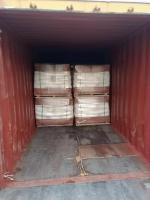
Brontë 103 is a polyacrylamide flocculant used mainly for mineral processing and solid-liquid separation. There is an important correction to the product classification, however: available technical literature describes Brontë 103 as a high-molecular-weight anionic polyacrylamide, rather than a truly nonionic polyacrylamide. A published study on copper leach-solution clarification specifically grouped Brontë 103 with Rheomax DR 1050 and Senfloc 2660 as commercial high-molecular-weight anionic polyacrylamide flocculants.
Some commercial sources describe Brontë 103 as having very low hydrolysis/charge and medium-to-high molecular weight, which may explain why it is sometimes marketed or described as a “nonionic” or nearly nonionic PAM.
1. Copper and Base-Metal Processing
The main application of Brontë 103 is mineral processing, especially clarification of mineral-processing liquors and slurries.
One documented application is the clarification of copper pregnant leach solution (PLS) before solvent extraction. In a published study involving a high-talc copper ore, Brontë 103 was tested alongside Rheomax DR 1050 and Senfloc 2660 for removing suspended solids from the copper leach solution. The PLS contained approximately 2,000 ppm suspended solids.
At an optimum tested dosage of approximately 116 g/t, Brontë 103 reduced residual TSS to about 954 ppm in that particular laboratory study.
This demonstrates the importance of Brontë 103 in hydrometallurgical clarification, where suspended solids must be removed before downstream solvent extraction.
2. Pregnant Leach Solution Clarification
A particularly valuable application is PLS clarification.
In copper, cobalt and other hydrometallurgical operations, ore is leached to produce a solution containing valuable dissolved metals. However, the leach liquor can also contain fine particles of:
- Silica
- Talc
- Clay
- Gangue minerals
- Fine ore particles
- Other suspended solids
These particles can interfere with solvent extraction.
Brontë 103 promotes aggregation of the fine solids into larger flocs, allowing them to settle more effectively.
The treatment sequence can be:
Ore leaching → PLS → Brontë 103 → flocculation → clarification → solvent extraction
This is one of the strongest applications associated with Brontë 103.
3. Solvent Extraction Pretreatment
The application of Brontë 103 before solvent extraction is particularly important.
Fine suspended solids entering the solvent-extraction circuit can cause:
- Organic-phase contamination
- Increased phase-disengagement time
- Emulsion formation
- Organic losses
- Poor phase separation
- Reduced operational stability
In the published copper study, Brontë 103 was used to clarify PLS before solvent extraction with LIX 984N. Under the reported optimum conditions, the copper recovery was approximately 98.98%, with a phase-disengagement time of about 80 seconds.
These results are application-specific laboratory results, not a universal performance guarantee, but they demonstrate why Brontë 103 can be valuable in copper hydrometallurgy.
4. Mineral Tailings Treatment
Another potential application is mineral tailings clarification and thickening.
Mining tailings contain large quantities of fine mineral particles that settle slowly. A suitable high-molecular-weight PAM can bridge these particles and form larger aggregates.
Brontë 103 can therefore be evaluated for:
- Tailings thickening
- Mineral slurry clarification
- Process-water recovery
- Fine-particle settling
- Concentrate thickening
- Thickener feed treatment
The objective is generally to produce clearer overflow and more concentrated underflow.
However, because polymer performance depends strongly on mineralogy, Brontë 103 should be tested against alternative anionic and low-charge PAM grades before commercial selection.
5. Copper Ore and High-Talc Ore Processing
Brontë 103 is particularly interesting for copper ores containing high levels of talc.
Talc is a very fine, plate-like mineral that can create significant clarification difficulties. Fine talc particles can remain suspended in leach solutions and interfere with downstream hydrometallurgical operations.
The published copper study specifically investigated a high-talc copper ore, making this a useful documented example of Brontë 103 application.
In such applications, the polymer's role is not to extract copper directly. Instead, it improves the physical separation of suspended solids from the copper-bearing solution.
6. Industrial Wastewater Treatment
Brontë 103 can also be considered for industrial wastewater containing fine mineral or inorganic solids.
Potential applications include:
- Mining wastewater
- Metallurgical wastewater
- Mineral-processing wastewater
- Metal-processing wastewater
- Ore-washing wastewater
- Inorganic industrial effluent
The polymer can aggregate suspended solids so they can be removed through sedimentation, thickening or filtration.
However, because Brontë 103 appears particularly associated with mineral-processing applications, it should not automatically be considered the best choice for municipal biological sludge or every type of industrial wastewater.
7. Thickening and Solid-Liquid Separation
The fundamental function of Brontë 103 is flocculation.
The long polyacrylamide chains can adsorb onto multiple particles and create polymer bridges:
Fine particles → polymer adsorption → particle bridging → larger flocs → faster settling
This can improve:
- Settling velocity
- Overflow clarity
- Solids concentration
- Filtration
- Water recovery
For mining operations, this can be particularly valuable in thickener circuits where efficient separation of water and mineral solids is essential.
8. Process-Water Recovery
Another important application is process-water recycling.
Mining and mineral-processing plants consume large amounts of water. Efficient flocculation allows more water to be recovered from tailings and process slurries.
Brontë 103 can potentially help produce:
Clear overflow → recycled process water
and:
Dense underflow → easier solids handling
This can reduce freshwater consumption and improve overall process efficiency.
9. How Brontë 103 Differs from Typical Nonionic PAM
If you are specifically looking for a nonionic polyacrylamide, Brontë 103 should be evaluated carefully.
A true nonionic PAM has essentially no intentional ionic charge, whereas published literature describes Brontë 103 as anionic high-molecular-weight PAM.
Some commercial descriptions call it “nonionic” because its hydrolysis/ionicity is very low.
Therefore, when purchasing Brontë 103 or looking for an equivalent, it is better to compare the actual:
- Hydrolysis degree
- Charge density
- Molecular weight
- Intrinsic viscosity
- Solid content
- Dissolution characteristics
- Flocculation performance
rather than relying solely on the “nonionic” label.
10. Dosage
The optimum Brontë 103 dosage depends on the application.
Factors include:
- Suspended-solids concentration
- Particle size
- Mineralogy
- Talc/clay content
- pH
- Ionic strength
- Temperature
- Mixing conditions
- Required clarification level
The published copper-PLS study tested dosages from approximately 58 to 349 g/t, with approximately 116 g/t identified as optimal under the specific experimental conditions.
This should not be interpreted as a universal dosage recommendation. Industrial plants should determine dosage through jar testing, settling-column tests and pilot trials.
Conclusion
The main application of Brontë 103 is mineral processing and solid-liquid separation, particularly clarification of copper and other base-metal leach solutions before solvent extraction.
Its most relevant applications include:
- Copper PLS clarification
- High-talc copper-ore processing
- Hydrometallurgical clarification
- Pretreatment before solvent extraction
- Mineral tailings clarification
- Mineral slurry thickening
- Process-water recovery
- Mining and metallurgical wastewater treatment
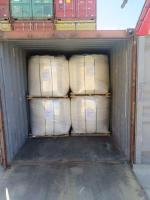
316_small.jpg "Best Sewage Treatment Chemicals Nonionic Polyacrylamide CAS No.9003-05-8")