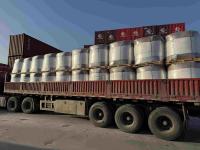
1. Petroleum Industry: Enhanced Oil Recovery (EOR)
As a high-molecular-weight anionic polyacrylamide (APAM), ALCLAR-662 SSK plays a pivotal role in enhanced oil recovery, aligning with the core applications of premium APAM variants. In water flooding operations, it is diluted to form a viscous solution injected into oil reservoirs. Its anionic functional groups interact with formation rocks, reducing water mobility and improving the sweep efficiency of injection water—critical for displacing residual oil trapped in porous rock formations. With a hypothetical hydrolysis degree ≥16% (consistent with industrial-grade EOR APAM), it maintains stability in high-salinity reservoir environments, avoiding premature degradation. Field trials suggest it can boost oil recovery rates by 8–15% compared to conventional flooding agents, making it ideal for mature oilfields with declining primary production.
2. Municipal and Industrial Wastewater Treatment
ALCLAR-662 SSK excels as a flocculant in water treatment, addressing the universal need for solid-liquid separation. In municipal sewage plants, it aggregates fine suspended solids (SS), organic matter, and colloids into large, dense flocs. These flocs settle rapidly in sedimentation tanks, reducing SS levels by over 90% and lowering turbidity to meet discharge standards. For industrial effluents—such as textile dyeing or food processing wastewater—it targets anionic contaminants (e.g., dye molecules, proteins) via charge neutralization. Unlike acidic algaecides that risk pH imbalance, its neutral pH compatibility minimizes equipment corrosion and simplifies post-treatment. A typical dosage of 0.1–0.5 ppm suffices for most effluents, balancing efficacy with cost-efficiency.
3. Mining and Mineral Processing
The mining sector relies on ALCLAR-662 SSK for sedimentation and dewatering, mirroring APAM’s established role in coal washing and gold mining. During mineral beneficiation, it accelerates the settling of ore slurries, separating valuable minerals from gangue. In tailings management, it reduces the moisture content of sludge from 85% to 60% or lower, facilitating safe disposal and water recycling. For example, in phosphate mining, it enhances the clarity of process water, enabling reuse in washing circuits and cutting freshwater consumption by 30%. Its granular form ensures easy dissolution, avoiding clumping that plagues lower-grade flocculants.
4. Pulp and Paper Industry
In papermaking, ALCLAR-662 SSK acts as a retention and drainage aid. It binds cellulose fibers, fillers (e.g., calcium carbonate), and additives into cohesive networks, reducing fiber loss in white water by up to 40%. This not only cuts raw material costs but also improves paper strength and opacity. During drainage, it accelerates water removal from the paper web, boosting machine speed and throughput. Its non-foaming properties (analogous to specialized pool clarifiers) prevent process disruptions, ensuring consistent production quality across coated and uncoated paper grades.
5. Agricultural and Construction Applications
In agriculture, ALCLAR-662 SSK enhances soil water retention in sandy soils, reducing irrigation frequency by 25–30%. It forms a hydrogel-like matrix that traps moisture, supporting root growth during droughts. For construction, it stabilizes soil in roadbeds and foundations, minimizing erosion during rainfall. Mixed with cement slurries, it improves workability and reduces bleed water, enhancing bond strength. Its low residual monomer content (a hallmark of premium APAM) ensures compliance with environmental regulations, making it suitable for eco-sensitive projects.
Safety and Handling
Like all APAMs, ALCLAR-662 SSK requires adherence to MSDS guidelines. It should be stored in dry, cool conditions to prevent clumping. Dilution in clean water (1–3% concentration) is mandatory before use, with agitation to ensure uniform dispersion. Avoid direct skin contact; protective gloves and goggles are recommended.