Hydroxamated polyacrylamide (HAPAM) is an advanced functional flocculant widely applied in gold ore processing, particularly in operations involving fine gold particles, clay-rich ores, refractory deposits, and complex hydrometallurgical slurries. By introducing hydroxamic acid functional groups (–CONHOH) into a high molecular weight polyacrylamide backbone, HAPAM combines selective metal-ion affinity, strong adsorption capability, and polymer bridging flocculation, making it highly effective in solid–liquid separation and process optimization in gold beneficiation circuits.
Below is a detailed and structured explanation (~899 words) of hydroxamated polyacrylamide used in gold ore processing.
1. Background: Challenges in Gold Ore Processing
Gold ores vary significantly in composition and are often associated with:
-
Quartz and silicate gangue
-
Clay minerals (kaolinite, montmorillonite)
-
Iron oxides (Fe₂O₃, FeOOH)
-
Fine and ultra-fine gold particles (<10 μm)
-
Refractory sulfide minerals (pyrite, arsenopyrite)
Modern gold processing methods include:
-
Gravity separation
-
Flotation
-
Cyanidation leaching
-
Carbon-in-pulp (CIP) / Carbon-in-leach (CIL)
However, key operational problems include:
-
Slow settling of fine particles
-
High pulp viscosity due to clays
-
Poor solid–liquid separation in thickeners
-
Loss of fine gold in tailings
-
Poor filtration performance
Hydroxamated polyacrylamide is used to address these challenges by improving flocculation efficiency and selectivity.
2. Chemical Structure and Functional Mechanism
2.1 Hydroxamic Acid Functional Groups
The hydroxamic group (–CONHOH) is the key functional unit in HAPAM. It has:
-
Strong chelating ability with metal ions such as Fe³⁺, Al³⁺, Cu²⁺
-
Ability to adsorb onto metal oxide surfaces
-
High selectivity for metal-rich mineral particles
In gold ores, this is particularly important because gold is often associated with iron oxides and sulfide minerals.
2.2 High Molecular Weight Polyacrylamide Backbone
-
Provides long-chain structure
-
Enables particle bridging
-
Forms large, dense flocs
2.3 Dual Flocculation Mechanism
HAPAM functions through:
(1) Chelation and Anchoring
Hydroxamic groups bind to metal ions on mineral surfaces, especially iron oxides and sulfides.
(2) Polymer Bridging
Long polymer chains link multiple particles into aggregates.
(3) Charge Reduction
Reduces electrostatic repulsion between fine particles.

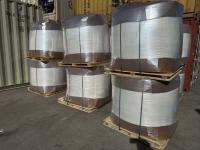



810_small.jpg "Magnafloc 1011 of anionic polyacrylamide can be replaced by Chinafloc A2520")