High absorption capacity super absorbent polymer granules are advanced functional materials widely used in hygiene products, agriculture, construction, medical applications, and industrial processes. A super absorbent polymer (SAP) is a cross-linked hydrophilic polymer capable of absorbing and retaining extremely large amounts of liquid relative to its own weight. The defining characteristic of high absorption capacity super absorbent polymer granules is their ability to absorb water or aqueous solutions many times their mass while maintaining structural integrity.
The most common type of high absorption capacity super absorbent polymer granules is based on sodium polyacrylate, produced through the polymerization and cross-linking of acrylic acid. The cross-linked three-dimensional network structure allows water molecules to enter and be retained within the polymer matrix. When exposed to liquid, high absorption capacity super absorbent polymer granules rapidly swell and form a gel, preventing the absorbed liquid from flowing back under normal conditions.
The mechanism behind high absorption capacity super absorbent polymer granules involves osmotic pressure and ionic interaction. Inside the polymer network, sodium ions create a concentration difference that draws water into the structure. As water enters, the polymer chains expand, and the cross-linked structure prevents dissolution. This combination of swelling and retention is what gives high absorption capacity super absorbent polymer granules their exceptional performance.
One of the most important performance indicators of high absorption capacity super absorbent polymer granules is free swell capacity. This refers to the maximum amount of liquid the SAP can absorb without any external pressure. High-quality SAP granules can absorb 300–800 times their weight in deionized water and 30–80 times in saline solutions. However, in practical applications, absorption under load (AUL) is equally important, as it measures the ability of the polymer to retain liquid under pressure.
Another critical property of high absorption capacity super absorbent polymer granules is gel strength. After swelling, the SAP must maintain a stable gel structure without breaking down. Strong gel strength ensures that the absorbed liquid remains locked within the polymer, even under mechanical stress. This is particularly important in applications such as diapers and sanitary products, where pressure is frequently applied.
The particle size and distribution of high absorption capacity super absorbent polymer granules play a significant role in performance. Smaller particles provide faster absorption due to larger surface area, while larger particles improve permeability and reduce gel blocking. A well-balanced particle size distribution ensures optimal absorption speed and efficiency.
High absorption capacity super absorbent polymer granules are widely used in hygiene products such as baby diapers, adult incontinence products, and sanitary napkins. In these applications, SAP provides rapid absorption, high retention, and low rewet, ensuring dryness and comfort. The use of high absorption capacity super absorbent polymer granules allows manufacturers to produce thinner and more efficient products without compromising performance.
In agriculture, high absorption capacity super absorbent polymer granules are used as water-retaining agents in soil. They absorb and store water during irrigation or rainfall and gradually release it to plant roots. This improves water use efficiency, reduces irrigation frequency, and enhances crop yield, especially in arid regions.
In the construction industry, high absorption capacity super absorbent polymer granules are used for internal curing of concrete. They absorb water during mixing and release it slowly during hydration, reducing shrinkage and improving durability. This application highlights the versatility of high absorption capacity super absorbent polymer granules beyond traditional liquid absorption.
In cable and electrical applications, SAP granules are used in water-blocking tapes and compounds. High absorption capacity super absorbent polymer granules quickly absorb water and form a gel barrier, preventing water migration and protecting cable integrity.
Another important application is in medical and healthcare products, where SAP is used in wound dressings, absorbent pads, and disposable medical supplies. The high absorption and retention capabilities of high absorption capacity super absorbent polymer granules help manage fluids effectively and maintain a clean environment.
Environmental considerations are increasingly important in the development of high absorption capacity super absorbent polymer granules. Traditional SAP materials are not biodegradable, leading to concerns about waste management. As a result, research is focused on developing bio-based and biodegradable SAPs derived from natural polymers such as starch and cellulose. These innovations aim to combine high performance with environmental sustainability.
The production process of high absorption capacity super absorbent polymer granules involves polymerization, cross-linking, drying, grinding, and surface treatment. Surface cross-linking is often applied to improve AUL and gel strength, enhancing overall performance. Manufacturers carefully control these processes to achieve the desired balance of properties.
In conclusion, high absorption capacity super absorbent polymer granules are highly versatile materials with exceptional liquid absorption and retention capabilities. Their performance is defined by factors such as absorption capacity, gel strength, particle size, and permeability. With applications ranging from hygiene and agriculture to construction and industrial uses, high absorption capacity super absorbent polymer granules play a vital role in modern technology. As research continues, future developments will focus on improving performance, enhancing sustainability, and expanding application possibilities.

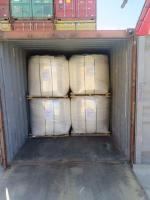



351_small.jpg "super absorbent polymer for cable water blocking tape")
440_small.jpg "Stockosorb 410 K Stockosorb 400 Stockosorb 500 F can be replaced by Chinafloc SAP")