


Our Products

Polyacrylamide / anionic polyacrylamide used for for ceramic tile industry
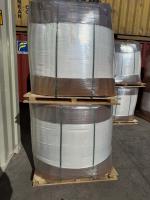
Anionic Polyacrylamide for the Ceramic Tile Industry: Applications, Benefits, and Selection
The ceramic tile industry consumes large quantities of water during raw material preparation, grinding, glazing, polishing, cutting, and equipment cleaning. These processes generate wastewater containing clay particles, silica, feldspar, pigments, glaze materials, and other fine suspended solids. If this wastewater is discharged without proper treatment, it can cause high turbidity, excessive suspended solids, sludge accumulation, and environmental problems.
Anionic polyacrylamide for the ceramic tile industry is widely used as a polymer flocculant to improve solid-liquid separation. It can promote the aggregation of fine ceramic particles into larger and stronger flocs, making them easier to remove through sedimentation, clarification, filtration, or sludge dewatering.
What Is Anionic Polyacrylamide?
Anionic polyacrylamide, commonly abbreviated as APAM, is a water-soluble polymer containing negatively charged functional groups. Its molecular weight and degree of hydrolysis can be adjusted according to the characteristics of different industrial wastewater streams.
In ceramic tile wastewater treatment, anionic polyacrylamide generally works through adsorption and bridging. The polymer chains attach to the surfaces of suspended mineral particles and connect several small particles together. This produces larger flocs that settle more rapidly than individual particles.
The performance of anionic polyacrylamide depends on wastewater chemistry, particle size, pH, ionic strength, suspended-solids concentration, and the type of ceramic raw materials present.
1. Ceramic Tile Wastewater Treatment
One of the most important applications of anionic polyacrylamide for ceramic tile industry wastewater is clarification.
Ceramic production wastewater can contain extremely fine particles that remain suspended for long periods. Ordinary gravity settling may not provide sufficient separation because these particles have low settling velocities.
Adding a suitable dose of anionic polyacrylamide can destabilize and aggregate the suspended solids. The resulting flocs are larger and heavier, allowing them to settle more quickly in a sedimentation tank or clarifier.
This treatment can help reduce:
- Suspended solids
- Turbidity
- Fine clay particles
- Ceramic powder
- Silica-containing particles
- Glaze residues
- Wastewater sludge volume
The clarified water can potentially be recycled into appropriate production processes after additional treatment, reducing fresh-water consumption.
2. Ceramic Sludge Dewatering
Ceramic tile factories generate sludge from wastewater clarification and other separation processes. This sludge normally contains a high percentage of water, making transportation, storage, and disposal expensive.
Anionic polyacrylamide for ceramic sludge dewatering can improve the separation of water from solid particles.
When APAM is mixed with ceramic sludge, polymer chains connect fine particles and form larger flocs. During mechanical dewatering, water can escape more easily from the floc structure.
Anionic polyacrylamide can therefore be used before equipment such as:
- Filter presses
- Belt filter presses
- Centrifuges
- Screw presses
- Vacuum filtration systems
The appropriate polymer should be selected through laboratory jar testing and, ideally, pilot-scale testing.
3. Treatment of Ceramic Grinding Wastewater
Grinding and polishing are important operations in ceramic tile manufacturing. During these processes, large amounts of fine mineral particles can enter the water.
Grinding wastewater may contain clay, feldspar, quartz, ceramic powder, and other inorganic solids.
Because many of these particles are extremely fine, they can remain suspended even after conventional settling. Anionic polyacrylamide can improve particle aggregation and accelerate sedimentation.
A typical treatment sequence may include:
Grinding wastewater → coagulation → anionic polyacrylamide addition → flocculation → sedimentation → clarified water recycling
Depending on the wastewater characteristics, inorganic coagulants such as polyaluminum chloride or ferric salts may be used before APAM.
4. Ceramic Glaze Wastewater
Ceramic glazing generates wastewater containing glaze particles, pigments, mineral fillers, and other suspended materials.
The chemical composition of glaze wastewater can vary significantly between factories and products. Therefore, polymer selection should not be based solely on the ceramic industry in general.
Anionic polyacrylamide may help aggregate negatively or positively interacting mineral particles and improve clarification. In some systems, however, cationic polymers or combinations of coagulants and polymers may perform better.
For this reason, a polyacrylamide jar test for ceramic wastewater is strongly recommended before full-scale application.
5. Water Recycling in Ceramic Tile Plants
Water recycling is becoming increasingly important for ceramic manufacturers because production processes can consume substantial quantities of water.
A properly designed wastewater treatment system can separate suspended solids from process water and return part of the clarified water to production.
Anionic polyacrylamide contributes to this process by accelerating the separation of suspended ceramic solids.
A simplified recycling system may consist of:
- Wastewater collection
- Equalization
- pH adjustment
- Coagulation
- Anionic polyacrylamide flocculation
- Sedimentation or clarification
- Filtration
- Water recycling
The required treatment configuration depends on the factory's raw materials, production technology, wastewater quality, and water-reuse requirements.
6. Ceramic Powder and Fine Mineral Separation
Ceramic manufacturing involves numerous mineral materials, including kaolin, feldspar, quartz, clay, and other additives. During washing and processing, very fine particles can become suspended in water.
Anionic polyacrylamide can function as a mineral flocculant for ceramic processing by bridging fine particles into larger aggregates.
This can be particularly useful when the wastewater contains a high concentration of fine solids that settle slowly.
The molecular weight of APAM is an important consideration. High-molecular-weight products generally provide strong bridging ability, but excessively high molecular weight can sometimes produce oversized or fragile flocs.
7. How to Select Anionic Polyacrylamide for Ceramic Wastewater
There is no single APAM grade suitable for every ceramic tile factory.
Important selection factors include:
Molecular Weight
High-molecular-weight anionic polyacrylamide is often considered when strong particle bridging and rapid sedimentation are required.
Anionic Charge Density
Charge density affects polymer-particle interactions. Depending on the ceramic wastewater chemistry, low-, medium-, or high-charge APAM may be appropriate.
Hydrolysis Degree
The degree of hydrolysis influences the polymer's ionic characteristics and interaction with suspended solids.
pH
Ceramic wastewater can have different pH values depending on raw materials, glaze formulations, cleaning chemicals, and treatment chemicals. Polymer performance should therefore be evaluated under actual operating pH conditions.
Sludge Characteristics
If the main objective is sludge dewatering, the optimum polymer may differ from the polymer used primarily for clarification.
8. Anionic Polyacrylamide Dosage
The dosage of anionic polyacrylamide for ceramic wastewater treatment should be determined experimentally rather than selected from a fixed dosage table.
A practical jar test can evaluate several polymer concentrations under controlled conditions.
For example, a laboratory test may compare different APAM dosages while monitoring:
- Floc formation
- Floc size
- Settling speed
- Supernatant clarity
- Sludge volume
- Filtration performance
Overdosing can sometimes cause polymer restabilization, poor settling, excessive residual polymer, or increased operating costs. Underdosing may result in incomplete flocculation.
Therefore, the optimum dosage is the lowest practical dosage that consistently achieves the required separation performance.
Conclusion
Anionic polyacrylamide for the ceramic tile industry is primarily used to improve the separation of fine suspended solids from process wastewater and sludge. Its applications include ceramic grinding wastewater treatment, glaze wastewater clarification, ceramic sludge dewatering, mineral-particle separation, and process-water recycling.
The effectiveness of APAM depends strongly on polymer molecular weight, charge density, hydrolysis degree, wastewater chemistry, pH, solids concentration, and treatment equipment.
For ceramic tile manufacturers, the most reliable approach is to test several anionic polyacrylamide grades using actual wastewater. Jar testing can identify the appropriate polymer type and dosage before commercial-scale implementation.
With the correct APAM selection and treatment process, ceramic manufacturers can improve wastewater clarification, enhance sludge dewatering, reduce suspended solids, and increase opportunities for process-water recycling.
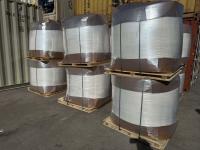
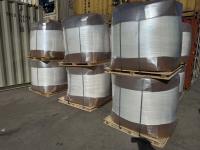
559_small.jpg "high viscossity of anionic polyacrylamide(A2520) used for construction bored pile")