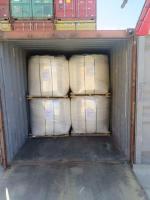
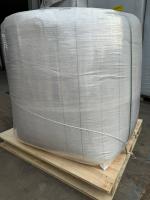
MAGNAFLOC® 351 is a high-molecular-weight anionic polyacrylamide flocculant widely used for solid–liquid separation in mineral processing, alumina refining, tailings management, and industrial water treatment. It is specifically designed to aggregate fine, inorganic particles that are difficult to settle under gravity alone. Through strong polymer-bridging action, MAGNAFLOC® 351 significantly improves settling rates, overflow clarity, and underflow compaction in a wide range of process conditions.
1. Chemical Nature and Flocculation Mechanism
MAGNAFLOC® 351 is an anionic polyacrylamide with very long polymer chains and low-to-moderate anionic charge density. Its primary flocculation mechanism is polymer bridging rather than charge neutralization. When added to a slurry, the polymer adsorbs onto multiple particle surfaces simultaneously, linking fine particles into large, structured flocs. These flocs settle rapidly and release entrained water efficiently during compaction.
The product performs reliably in alkaline, high-solids, and high-ionic-strength environments, making it particularly suitable for mineral-based slurries such as red mud, tailings, and process residues.
2. Application in Alumina Refining – Red Mud Separation
One of the most important applications of MAGNAFLOC® 351 is in alumina refineries operating the Bayer process. During bauxite digestion, insoluble residues form fine red mud particles that are slow to settle and difficult to separate. MAGNAFLOC® 351 is used in:
When dosed into the feedwell or dilution zone, MAGNAFLOC® 351 rapidly flocculates fine red mud particles, resulting in faster settling, clearer overflow liquor, and denser underflow. Improved clarification enhances liquor recovery, reduces soda losses, and improves the efficiency of downstream washing and disposal stages.
3. Application in CCD Washing Circuits
In counter-current decantation (CCD) washing circuits, MAGNAFLOC® 351 supports stable thickener operation and effective displacement washing. Strong floc formation prevents fine solids from short-circuiting into the overflow, ensuring low turbidity wash liquor. This improves recovery of caustic soda and alumina values while minimizing wash-water consumption. Stable underflow density also improves control of washing stages and overall circuit efficiency.
4. High-Solids Thickeners and Residue Disposal Preparation
MAGNAFLOC® 351 is widely applied in high-solids red mud thickeners prior to residue disposal. At this stage, the goal is to maximize solids concentration and minimize free water. The polymer produces compressible, shear-resistant flocs that release interstitial water effectively under compression.
Higher underflow density reduces slurry volume, pumping energy, and pipeline wear, while improving the stability of residue stacking, thickened tailings, or dry disposal systems. This application is critical for reducing environmental risk and meeting modern residue management standards.
5. Mineral Processing and Tailings Management
Beyond alumina refining, MAGNAFLOC® 351 is extensively used in mineral processing operations, including copper, gold, iron ore, coal, phosphate, and base-metal processing. In tailings thickeners and clarifiers, the polymer enhances settling kinetics and water recovery from fine mineral slurries.
Key benefits include:
-
Faster settling rates
-
Increased thickener throughput
-
Clear overflow water suitable for recycling
-
Higher underflow density and improved tailings stability
These benefits directly reduce freshwater consumption and tailings storage requirements, improving both economics and environmental performance.
6. Industrial Water and Process Water Treatment
MAGNAFLOC® 351 is also applied in industrial water treatment systems where suspended solids removal is required. Typical applications include:
-
Process water clarification
-
Cooling water clarification
-
Wash-water and stormwater treatment
-
Industrial effluent polishing
In these systems, MAGNAFLOC® 351 removes fine suspended solids and reduces turbidity, producing water suitable for reuse or compliant discharge. It is often used in combination with coagulants such as polyamine or inorganic salts to optimize floc formation and settling performance.
7. Operational Benefits
The use of MAGNAFLOC® 351 provides significant operational advantages:
-
Improved settling rates and thickener capacity
-
Enhanced overflow clarity and reduced solids carryover
-
Increased underflow density and improved dewatering
-
More stable mud beds and reduced rake torque
-
Improved process stability under variable feed conditions
These benefits translate into reduced downtime, improved plant throughput, and lower operating costs.
8. Environmental and Economic Impact
From an environmental perspective, MAGNAFLOC® 351 supports sustainable operation by maximizing water recovery and minimizing waste volume. Improved solid–liquid separation reduces the release of fine solids into effluents and lowers the environmental footprint of residue disposal. Economically, reduced energy consumption, improved chemical efficiency, and lower disposal costs provide measurable cost savings.
9. Conclusion
MAGNAFLOC® 351 is a high-performance anionic polyacrylamide flocculant designed for demanding solid–liquid separation applications. Its effectiveness in red mud settling, CCD washing, high-solids thickening, mineral tailings management, and industrial water clarification makes it a key process chemical in alumina refineries and mineral processing plants. By improving settling efficiency, water recovery, and residue handling, MAGNAFLOC® 351 delivers strong operational, economic, and environmental benefits across a wide range of industries.

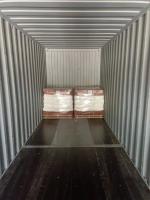


978_small.jpg "PHPA anionic polyacrylamide for offshore drilling")