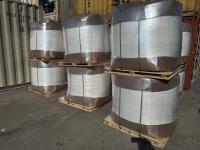
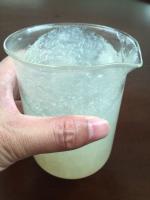
Super absorbent polymer (SAP) used in sanitary napkin production is a highly engineered functional polymer material, with its performance fundamentally determined by its chemical raw materials, polymerization system, and post-crosslinking structure. From an industrial and polymer science perspective, SAP for hygiene products is not a single raw material, but rather a formulated polymer system derived from acrylic monomers, neutralization agents, crosslinkers, and additives. The following provides a structured and technical analysis of SAP raw materials specifically for sanitary napkin manufacturing.
1. Core Chemical Raw Materials of SAP
1.1 Primary Monomer: Acrylic Acid (AA)
The principal raw material for SAP synthesis is acrylic acid (CH₂=CH–COOH). It serves as the backbone monomer for forming polyacrylic chains. Acrylic acid provides:
-
Reactive vinyl group (C=C) for free radical polymerization
-
Carboxylic acid groups (–COOH) responsible for hydrophilicity
-
Ability to undergo partial neutralization to form ionic structures
In industrial production, acrylic acid is typically derived from propylene oxidation, ensuring high purity for hygiene-grade SAP.
1.2 Neutralizing Agent: Sodium Hydroxide (NaOH)
Acrylic acid is partially neutralized using sodium hydroxide, converting –COOH groups into –COONa (sodium carboxylate) groups. This step is critical because:
-
It introduces ionic functionality, enabling osmotic swelling
-
Controls the degree of neutralization (DN), typically 50–75% for hygiene SAP
-
Influences absorption capacity and gel strength
The final polymer is therefore sodium polyacrylate, the dominant SAP used in sanitary napkins.
1.3 Crosslinking Agents
SAP must be lightly crosslinked to form a three-dimensional network structure. Without crosslinking, the polymer would dissolve rather than swell.
Common crosslinkers include:
-
N,N′-methylenebisacrylamide (MBA)
-
Polyethylene glycol diacrylate (PEGDA)
-
Trimethylolpropane triacrylate (TMPTA)
Functions:
-
Create insoluble network structure
-
Control gel strength and elasticity
-
Balance between absorbency and mechanical integrity
The crosslinked network enables SAP to absorb water and retain it without dissolution.
1.4 Initiators (Polymerization Catalysts)
Free radical polymerization requires initiators such as:
-
Ammonium persulfate (APS)
-
Sodium persulfate
-
Hydrogen peroxide (H₂O₂)
-
Redox systems (e.g., APS + sodium bisulfite)
These initiators:
-
Generate free radicals to start polymerization
-
Control reaction kinetics and molecular weight
2. Secondary Functional Raw Materials
2.1 Surface Crosslinking Agents
After bulk polymerization, SAP particles undergo surface crosslinking using agents such as:
-
Ethylene carbonate
-
Propylene carbonate
-
Polyols
Purpose:
-
Improve absorbency under load (AUL)
-
Enhance gel strength and permeability
-
Reduce gel blocking in sanitary napkin cores
2.2 Additives and Performance Modifiers
(1) Anti-caking agents
-
Silica or fine inorganic powders
-
Prevent particle agglomeration
(2) Surfactants
-
Improve wettability and liquid penetration
(3) Deodorizing agents
-
Zinc compounds or activated carbon derivatives
-
Reduce odor formation in sanitary napkin applications
(4) Biodegradable modifiers (optional)
-
Starch-grafted polymers
-
Improve environmental profile
2.3 Co-monomers (Optional)
To tailor SAP properties, co-monomers may be introduced:
-
Acrylamide (AM) → improves gel strength
-
2-acrylamido-2-methylpropane sulfonic acid (AMPS) → enhances salt resistance
These copolymer systems are often used in high-performance hygiene SAP.
3. Final Chemical Structure of SAP
The final product is typically:
-
Crosslinked sodium polyacrylate
-
Chemical structure:
−CH2–CH(COONa)−ₙ
This structure contains:
-
Hydrophilic carboxylate groups (–COO⁻)
-
Sodium ions (Na⁺) enabling osmotic pressure
-
Crosslinked network preventing dissolution
SAP can absorb 200–1000 times its weight in liquid, depending on formulation.
4. Functional Role of SAP in Sanitary Napkins
In sanitary napkin production, SAP is used in the absorbent core, typically blended with fluff pulp. Its key functions include:
4.1 Liquid Absorption Mechanism
-
Rapid intake of menstrual fluid
-
Swelling into hydrogel upon contact
-
Retention of liquid within polymer network
The mechanism is based on:
-
Osmotic pressure difference
-
Electrostatic repulsion of –COO⁻ groups
-
Hydrogen bonding with water molecules
4.2 Key Performance Parameters
(1) Absorption Capacity
-
Determines total fluid retention
-
Critical for high-flow conditions
(2) Absorbency Under Load (AUL)
-
Measures absorption under pressure (body weight)
-
Essential for leakage prevention
(3) Gel Strength
-
Prevents deformation and gel blocking
(4) Rewet Performance
-
Ensures dryness of surface layer
4.3 Advantages in Sanitary Napkin Design
-
Enables ultra-thin product structure
-
Reduces reliance on fluff pulp
-
Improves comfort, dryness, and hygiene
-
Provides long-lasting absorption performance
5. Industrial Production Process Overview
The SAP manufacturing process includes:
-
Neutralization of acrylic acid with NaOH
-
Free radical polymerization with crosslinker
-
Formation of hydrogel bulk polymer
-
Drying and pulverization into particles
-
Surface crosslinking treatment
-
Sieving and classification
The final product is typically:
-
White granular powder (200–800 μm particle size)
6. Hygiene-Grade SAP Requirements
SAP used in sanitary napkins must meet stringent specifications:
-
Non-toxic and skin-safe
-
Low residual monomer (acrylic acid < 500 ppm typically)
-
High purity and low odor
-
Controlled particle size distribution
-
Excellent liquid permeability and retention
Hygiene-grade SAP differs from industrial-grade materials in purity, safety, and performance consistency.
7. Integration with Other Sanitary Napkin Raw Materials
SAP does not function independently; it is integrated with:
-
Fluff pulp (cellulose fiber matrix)
-
Nonwoven top sheet
-
PE back sheet
-
Adhesives
SAP enhances the absorbent core by:
-
Increasing liquid retention
-
Reducing bulk thickness
-
Improving product efficiency
Conclusion
The raw material system of SAP for sanitary napkin production is fundamentally based on acrylic acid polymer chemistry, specifically the synthesis of crosslinked sodium polyacrylate. Key raw materials include acrylic acid, sodium hydroxide, crosslinking agents, and initiators, supported by functional additives and surface treatment chemicals. Through controlled polymerization and crosslinking, SAP achieves a three-dimensional hydrophilic network capable of absorbing and retaining large volumes of fluid.