Our Products
Flocculant / Range of anionic flocculants(ALCLAR-662 ALCLAR HP-24 ALCLAR HP-21 ALCLAR HP-20 )from Chinafloc
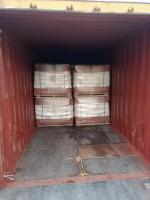



The main application of an anionic flocculant used for red mud in an aluminum plant is to improve the efficiency, speed, and quality of solid–liquid separation in the Bayer process, which is the dominant industrial method for producing alumina from bauxite. During alumina refining, the digestion of bauxite in hot caustic soda solution generates a large amount of insoluble residue known as red mud, a fine, highly alkaline, iron-rich sludge. Because the Bayer process produces more than one ton of red mud for every ton of alumina, handling, separating, washing, and disposing of this red mud is one of the most important operational challenges in an alumina refinery. This is where an anionic flocculant becomes essential.
Anionic flocculants are typically high-molecular-weight polymers made from acrylamide, acrylic acid, or other anionic monomers. Their negative charge allows them to interact with the positively charged or partially positive mineral particles found in red mud, forming bridges between fine particles and causing them to aggregate into larger, faster-settling flocs. The primary application of the anionic flocculant is therefore to accelerate sedimentation, improve clarity, increase underflow density, and stabilize the entire mud–liquor separation circuit.
After digestion, the slurry is directed to primary settlers or clarifiers. Without flocculant, red mud particles—typically less than 5–10 microns—would remain suspended for several hours or even days due to extremely slow natural settling. The anionic flocculant is added to the feed well or directly into the thickener, where it instantly interacts with the suspended solids. As the long polymer chains adsorb onto different particles, a “polymer bridge” forms, linking them into much larger structures. This causes a dramatic increase in particle mass and settling velocity.
The result is:
Rapid formation of a clear interface between solids and liquor
Significantly faster settling compared to natural sedimentation
Higher throughput because the settler can process more slurry per unit time
Fast settling is crucial, because the alumina plant’s productivity depends heavily on how quickly red mud can be removed from the pregnant liquor.
The overflow liquor from primary settlers contains the dissolved sodium aluminate needed for downstream precipitation of aluminum hydroxide. The liquor must be clear, low in suspended solids, and free of fine mud particles that would otherwise contaminate the precipitation circuit, lead to product quality problems, or cause scale formation in heat-exchange equipment.
Anionic flocculants help by:
Dragging fine particles down with larger flocs
Reducing turbidity in the overflow
Preventing fines from carrying over into filters or precipitators
Minimizing the load on polishing filters
The improved liquor clarity leads to higher alumina purity, better precipitation efficiency, and less maintenance on downstream equipment.
Another key application of an anionic flocculant in red-mud settling is to maximize the density (or percent solids) in the underflow. After flocculation, the aggregated flocs pack together more efficiently at the bottom of the thickener, forming a denser mud bed.
Higher underflow density brings several benefits:
Reduced volume of red mud to store or pump
Lower energy consumption for pumping thickened sludge
Improved washing efficiency in subsequent stages
Smaller storage ponds or more stable dry-stacking operations
A denser underflow also improves the performance of washers, filters, and tailings systems, making the entire waste-handling operation more cost-effective.
After primary settling, the red mud must be washed multiple times in counter-current decantation (CCD) washers to recover residual caustic soda and alumina values. If the mud settles slowly or poorly, the washing process becomes inefficient, leading to chemical losses. Anionic flocculants help maintain:
Fast mud settlement in washers
Efficient displacement washing
Recovery of valuable caustic and alumina
Lower soda losses to waste
Improved washing directly reduces operating cost and environmental impact.
As the anionic flocculant forms stronger, more uniform flocs, the physical properties of the mud improve across the entire mud-handling chain. In many alumina plants, filtration of red mud (drum filters, press filters, or vacuum filters) is required for either wastewater minimization or dry disposal. Well-flocculated mud leads to:
Better permeability in filters
Faster cake formation
Lower moisture content in the final cake
Reduced filter cloth clogging
Thickening is also more stable, with fewer upsets due to inconsistent mud characteristics.
Because the flocculant accelerates settling and improves mud density, the alumina plant can use:
Smaller settlers or thickeners
Lower pumping energy
Less water for washing
Fewer filter replacements
A small dosage of flocculant (often <100 g per ton of bauxite) can reduce the cost of liquor clarification dramatically. The economic advantage is a major reason why every modern alumina refinery relies heavily on anionic flocculants in the clarification stage.
Red mud management is one of the largest environmental issues in the aluminum industry. Effective use of anionic flocculant contributes directly to sustainability by:
Increasing red-mud solids content for safer storage
Reducing caustic soda residue in waste
Lowering the risk of pond overflow or leakage
Enabling dry stacking, deep thickening, or filter pressing
Reducing the total volume of tailings
Cleaner overflow liquor also reduces environmental risk in case of accidental discharge.
Modern alumina refineries run continuously, so any disruption in red mud settling can shut down the entire production line. By ensuring consistent settling, predictable mud flow, and stable overflow clarity, anionic flocculants provide operational reliability. This stability leads to:
Higher uptime
Smoother operation of heaters and precipitators
Better product consistency
Lower maintenance frequency
tags :1.ALCLAR-662 SSK
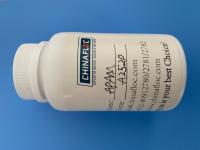
491_small.jpg "Chinafloc Anionic Flocculant|anionic flocculant from chinafloc")