High-efficient oil–water separator agent Polydadmac, also known as polydiallyldimethylammonium chloride, is a highly cationic, water-soluble polymer widely used across industrial wastewater treatment systems to separate emulsified oil, dispersed oil, suspended solids, and colloidal impurities from water. Due to its strong positive charge density, excellent charge neutralization capacity, and rapid floc formation, Polydadmac is considered one of the most effective primary coagulants for oil–water separation. Its application covers petroleum refining, petrochemicals, offshore oil fields, drilling systems, chemical plants, steel mills, food processing units, and many other industrial effluent treatment processes.
The fundamental mechanism behind Polydadmac’s oil-water separation ability lies in its very high cationic charge density, which allows it to neutralize the negatively charged oil droplets, surfactants, fine solids, and colloidal particles commonly found in oily wastewater. In untreated systems, oil droplets remain stable and dispersed because of electrostatic repulsion and the presence of natural or synthetic emulsifiers. When Polydadmac is added to such wastewater, its cationic groups immediately interact with negatively charged components, eliminating the electrical double layer and destabilizing emulsions. This destabilization causes oil droplets and fine particles to lose stability, aggregate, and form larger flocs that can be easily removed by flotation, sedimentation, or filtration.
One of the most important applications of Polydadmac is in oilfield produced water treatment, including offshore platforms, onshore oilfields, and enhanced oil recovery operations. Produced water often contains high levels of stable emulsified oil, residual polymer, metal ions, suspended solids, and organic contaminants. Polydadmac effectively collapses water-in-oil and oil-in-water emulsions formed during drilling and extraction processes. In separation systems such as induced gas flotation (IGF) units, hydrocyclones, and API separators, Polydadmac helps create strong, fast-floating flocs that rise to the surface with gas bubbles. As a result, operators achieve lower oil-in-water concentrations, reduced chemical consumption, and better compliance with environmental discharge regulations.
In petroleum refinery and petrochemical wastewater, Polydadmac acts as a primary coagulant to remove free oil, emulsified oil, surfactants, and fine solids generated from desalter units, catalytic cracking, tank cleaning, and condensate water systems. The polymer works effectively at low dosage because it directly neutralizes contaminants without the need for large amounts of inorganic salts or high molecular-weight flocculants. When used before dissolved air flotation (DAF) systems, Polydadmac enhances air-bubble attachment, forming strong flocs that float rapidly. This results in cleaner effluent, reduced sludge production, and improved performance of downstream biological treatment processes.
Another important field of application for Polydadmac is industrial wastewater pretreatment from metalworking, machining, and steel manufacturing. Cutting oils, lubricants, coolants, and metal-soaked emulsions are difficult to break due to surfactant stabilization. Polydadmac quickly ruptures these emulsions, allowing oil and solids to separate efficiently. By breaking emulsions at the source, the polymer reduces operational issues such as membrane fouling, pump clogging, and corrosion in downstream systems. Many steel mills and automotive plants rely on Polydadmac as a core treatment chemical to maintain stable and efficient wastewater operation.
Polydadmac is also widely applied in chemical plant wastewater treatment, especially where polymer-rich or surfactant-rich effluents are generated. In the production of resins, latexes, pesticides, or detergents, wastewater often contains hundreds of surfactants and fine organic colloids. These components strongly stabilize oil–water mixtures and resist conventional coagulants. Polydadmac, because of its high cationic strength and ability to break both ionic and non-ionic emulsions, is highly effective in destabilizing such complex systems. It is often used in combination with anionic polyacrylamide or inorganic coagulants to optimize floc strength and clarity of treated water.
In food processing, slaughterhouse, and dairy effluents, animal fats, oils, proteins, and grease create stubborn emulsions that must be removed before biological treatment. Polydadmac quickly binds to fatty acids, grease droplets, and suspended solids, forming dense flocs that float easily during DAF treatment. This reduces biochemical oxygen demand (BOD), chemical oxygen demand (COD), and total suspended solids (TSS), ensuring more efficient and stable biological treatment downstream. Its ability to function across a broad pH range also makes it suitable for diverse food industry wastewater systems.
Another notable application is in paper mills and pulp processing, where Polydadmac is used as a pitch control agent, resin stabilizer, and wastewater clarifier. Oils and pitch components released during pulping can cause operational issues such as deposits, foaming, and paper defects. Polydadmac binds to these hydrophobic impurities and assists in deresination, allowing efficient removal through flotation or sedimentation.
In municipal wastewater treatment, Polydadmac can act as a coagulant to remove oil and grease (O&G), surfactants, and fine solids from primary clarifiers. It is also utilized in sludge dewatering to improve floc structure and enhance filtration performance. Its ability to operate effectively in cold water and variable influent conditions makes it a reliable choice for municipal plants.
Besides direct oil-water separation, Polydadmac is used for color removal, COD reduction, phosphate precipitation enhancement, and membrane pretreatment to prevent fouling by emulsified oils. It is compatible with ultrafiltration (UF), nanofiltration (NF), and reverse osmosis (RO) systems and significantly reduces the load of hydrophobic contaminants.
In summary, the application of high-efficient oil–water separator agent Polydadmac spans a wide range of industries due to its exceptional charge neutralization ability, rapid emulsion breaking efficiency, and strong floc formation capability. It provides consistent results across complex wastewater streams, lowers chemical cost, enhances equipment performance, and ensures compliance with environmental discharge standards.

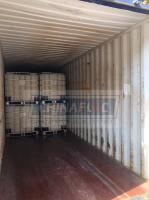


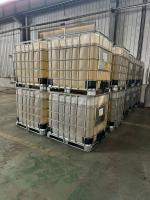
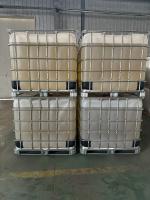
867_small.jpg "polydadmac of FL4816 FL 4620 FL 4616 can be replaced by Chinafloc --polydadmac")