


Our Products

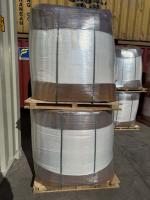
Polyacrylamide / HXPAM based flocculant used for aluminum processing to separate solids from liquids
1. Introduction to HXPAM-Based Flocculants
HXPAM-based flocculants are specialized polymeric reagents that can be used to improve solid-liquid separation in aluminum processing, particularly in alumina production, bauxite beneficiation, red mud settling, residue washing, and industrial wastewater treatment. In these processes, fine mineral particles remain suspended in water, making clarification, thickening, and filtration difficult. An appropriately selected HXPAM-based flocculant can accelerate particle aggregation, improve settling performance, and help recover process water.
HXPAM is commonly used to refer to hydroxamated polyacrylamide, a chemically modified polyacrylamide containing hydroxamic acid functional groups. These functional groups can interact with mineral surfaces and certain metal-containing species, potentially improving particle attachment and floc formation under suitable operating conditions. However, the exact performance depends on the polymer's molecular weight, hydroxamic group content, ionic characteristics, and the chemistry of the process slurry.
In aluminum processing, selecting the right flocculant is important because bauxite residues, red mud, and alumina-bearing suspensions can contain extremely fine particles, dissolved salts, and alkaline process liquor. Conventional anionic polyacrylamide may perform well in many applications, while HXPAM-based products can offer an alternative where stronger mineral-surface interactions or improved settling characteristics are needed.
The primary objective is to achieve efficient solid-liquid separation while maintaining process stability, reducing water consumption, and improving the handling of solid residues.
2. How HXPAM-Based Flocculants Work
HXPAM-based flocculants promote solid-liquid separation through several mechanisms, including particle adsorption, polymer bridging, and interactions between functional groups and mineral surfaces.
Particle adsorption: Hydroxamic acid groups can interact with certain metal-containing sites on mineral surfaces. The strength of these interactions depends on mineralogy, pH, dissolved ions, and the chemical composition of the slurry.
Polymer bridging: Long polymer chains can attach to multiple suspended particles simultaneously. This creates larger aggregates, commonly called flocs, that settle more rapidly than individual fine particles.
Floc growth: As particles collide under controlled mixing, polymer chains help consolidate them into larger structures. These flocs can be separated more readily by gravity settling, thickening, or filtration.
Clarification: Once the aggregates settle, the liquid phase above the sediment becomes clearer, allowing water to be recovered and potentially recycled into the process.
The performance of HXPAM is not determined by its chemical structure alone. Excessive dosage, unsuitable mixing conditions, or incompatible water chemistry may produce weak flocs, increase chemical consumption, or impair clarification. Therefore, laboratory testing is essential before industrial application.
3. Main Applications of HXPAM in Aluminum Processing
3.1 Red Mud Settling and Clarification
Red mud settling is one of the most important applications of HXPAM-based flocculants. During the Bayer process, bauxite is digested in a hot, concentrated caustic solution to dissolve alumina-bearing minerals. Insoluble residues, including iron oxides, titanium-bearing minerals, and other impurities, remain suspended in the sodium aluminate liquor.
These fine particles must be separated efficiently to obtain clarified liquor for subsequent alumina production.
HXPAM-based flocculants, including specialized products in the CYFLOC HX series, are designed for red mud clarifiers and related alumina-refining operations. Their hydroxamate functional groups can improve interactions with mineral particles, supporting rapid floc formation and effective settling.
The principal benefits may include:
-
Faster red mud settling and improved thickener throughput.
-
Reduced suspended solids in the clarified overflow.
-
Improved capture of fine particles that are difficult to settle.
-
Better control of sludge handling and underflow characteristics.
-
Increased recovery of process liquor for reuse.
Actual results depend on the characteristics of the bauxite, the operating temperature, caustic concentration, and the selected polymer grade.
3.2 Counter-Current Decantation (CCD) Washing
Another important application is counter-current decantation washing of red mud. CCD circuits use a series of washing thickeners to recover soluble sodium compounds from the residue while reducing the amount of valuable process liquor lost with the discharged solids.
HXPAM-based flocculants can help suspended solids settle in individual washing stages, allowing clarified liquid to overflow and concentrated mud to move through the circuit.
Effective flocculation can improve washing efficiency, reduce fine-particle carryover, and support the recovery of caustic soda and dissolved alumina-bearing liquor. Specialized hydroxamated polyacrylamide products are commercially designed for these red mud washing applications.
Not all bauxite ores produce the same settling behavior. Some generate red mud with high proportions of ultrafine particles, high surface area, or mineral compositions that make conventional flocculation less effective.
In these situations, HXPAM may provide an alternative to conventional anionic polyacrylamide or polyacrylate flocculants. Its hydroxamate functionality can improve the capture of certain fine mineral particles, potentially reducing suspended solids in the supernatant.
Nevertheless, HXPAM is not automatically superior for every bauxite source. Comparative settling tests are needed to determine which polymer provides the best combination of settling rate, overflow clarity, underflow density, and sludge flowability.
4. Advantages Compared with Conventional Anionic PAM
Both conventional anionic polyacrylamide and HXPAM can be used in alumina refining, but their functional chemistry differs.
|
Performance factor |
Conventional anionic PAM |
HXPAM-based flocculant |
|---|---|---|
|
Main polymer functionality |
Amide and anionic groups |
Amide and hydroxamate groups, with other groups depending on formulation |
|
Particle aggregation |
Primarily adsorption and polymer bridging |
Polymer bridging plus hydroxamate-related surface interactions |
|
Red mud settling |
Effective with suitable grades |
Designed for demanding alumina-refining conditions |
|
Fine-particle capture |
Depends on polymer and slurry |
May provide improved capture for certain residues |
|
Overflow clarification |
Often effective |
Can provide low suspended-solids overflow |
|
Grade selection |
Based on charge, molecular weight, and process conditions |
Also considers hydroxamate functionality and formulation |
These are general comparisons, not guarantees for every grade. Research on bauxite residue flocculation has shown that hydroxamate and polyacrylate polymers can produce different floc structures and different levels of fine-particle capture.
Correct selection is essential for achieving reliable solid-liquid separation in an alumina plant.
First, characterize the slurry. Determine the solids concentration, particle-size distribution, mineral composition, pH, temperature, and dissolved salt concentration. Bayer-process liquor requires testing under representative alkaline conditions.
Second, conduct laboratory settling tests. Compare several HXPAM grades against the plant's existing flocculant. Measure initial settling rate, supernatant turbidity or suspended solids, settled-bed volume, underflow solids concentration, and sludge flowability.
Third, optimize dosage. Start with the supplier's recommended test range and adjust the dosage systematically. Both underdosing and overdosing can reduce separation efficiency. The optimum dosage should be established experimentally rather than assumed from another plant.
Fourth, optimize polymer preparation and mixing. Prepare the product according to its technical instructions. Emulsion products may require appropriate inversion, dilution, and maturation conditions. Ensure sufficient mixing for dispersion without excessive shear that breaks newly formed flocs.
Finally, conduct a controlled plant trial. Monitor settling performance, overflow clarity, thickener capacity, underflow density, reagent consumption, and process stability. Results should be assessed across representative operating conditions rather than from a single sample.
6. Conclusion
HXPAM-based flocculants are specialized solid-liquid separation chemicals developed for demanding aluminum-processing applications, particularly red mud settling, Bayer-process clarification, and CCD mud washing. Their hydroxamate functional groups can enhance interactions with mineral surfaces, supporting fine-particle capture, faster settling, and clearer overflow under suitable conditions.
For alumina producers, the main potential benefits are improved thickener performance, more effective residue washing, and better recovery of process liquor. The most appropriate HXPAM grade should be selected according to the bauxite source, slurry chemistry, equipment, and required separation performance.
463_small.jpg "Anionic polyacrylamide copolymer|best quality of anionic polyacrylamide")
581_small.jpg "the substituation of anionic polyacrylamide MAGNAFLOC-338 be replaced by Chinafloc")
