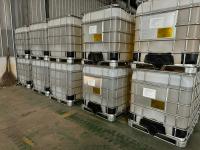
Application of Cationic Polyamine C-577
CIt belongs to the polyamine family synthesized through the polymerization of epichlorohydrin and dimethylamine or related amine compounds. Due to its strong positive charge, excellent charge-neutralization capacity, and rapid reaction speed, C-577 is extensively applied in municipal water treatment, industrial wastewater purification, sludge dewatering, papermaking, mining, oil & gas, textile, and chemical processing industries. Its core function is to destabilize negatively charged colloidal particles, allowing them to aggregate into larger flocs that can be easily separated by sedimentation, flotation, or filtration.
1. Municipal Drinking Water Treatment
One of the most important applications of Cationic Polyamine C-577 is in municipal drinking water purification. Natural surface water sources such as rivers, lakes, and reservoirs contain suspended solids, clay particles, algae, organic matter, and pathogens that carry negative surface charges. These charges prevent natural settling and cause turbidity.
C-577 acts as a high-efficiency organic coagulant, neutralizing the negative charges on colloids instantly. Once charge neutralization occurs, fine particles aggregate into visible flocs, enabling rapid clarification through sedimentation and filtration. Compared with traditional inorganic coagulants such as aluminum sulfate and ferric chloride, C-577:
-
Works effectively over a wider pH range
-
Produces less chemical sludge
-
Consumes less alkalinity
-
Reduces residual metal concentration in treated water
-
Improves filter run time and reduces backwashing frequency
It is often used alone or in combination with PAC (polyaluminum chloride) or ferric salts to improve clarity, reduce turbidity, and achieve consistent finished-water quality in water treatment plants.
2. Industrial Wastewater Treatment
Cationic Polyamine C-577 is extensively applied in industrial effluent treatment, especially for wastewater with high turbidity, high colloidal content, and strong color. Typical industries include:
In these systems, wastewater usually contains dyes, pigments, surfactants, oils, fine suspended solids, and emulsified organics, all of which carry strong negative surface charges. C-577 provides rapid charge neutralization and bridging, promoting fast floc formation and separation.
In colored wastewater such as textile and dyeing effluent, C-577 shows excellent decolorization ability by neutralizing anionic dye molecules and forming dense flocs that can be removed by dissolved air flotation or sedimentation. When used as a pretreatment coagulant, it significantly reduces COD, SS, and color load, thus lowering the burden on downstream biological treatment systems.
3. Sludge Conditioning and Dewatering
Another key application of Cationic Polyamine C-577 is in sludge conditioning before mechanical dewatering. Activated sludge from municipal or industrial wastewater treatment plants contains fine negatively charged particles with high water-binding capacity, which makes mechanical dewatering difficult.
When C-577 is added prior to belt presses, centrifuges, filter presses, or screw presses, it:
-
Neutralizes negative surface charges
-
Breaks down the hydration layer around sludge particles
-
Enhances floc strength and compactness
-
Improves water release and cake dryness
As a result, sludge cake moisture content is reduced, solid capture rate is increased, and polymer consumption of secondary flocculants (such as cationic polyacrylamide) is lowered. This leads to significant cost savings in sludge disposal and transportation.
4. Papermaking and Pulp Processing
In the paper industry, Cationic Polyamine C-577 plays an important role in retention aid systems, wastewater treatment, and charge control. Pulp fibers, fillers, fines, and additives are typically anionic, leading to poor retention and high white water load.
C-577 is used as:
-
A primary coagulant for white water clarification
-
A charge neutralizer before fine retention aids
-
A wastewater pretreatment agent
It improves fiber and filler retention, reduces solids loss, enhances drainage on the paper machine, and improves paper sheet formation. In paper mill wastewater treatment, it rapidly flocculates suspended fibers and organic contaminants, allowing for effective recycling of clarified water.
5. Oil & Gas and Refinery Wastewater
In the oilfield and petroleum refining industry, wastewater often contains emulsified oil, polymers, fine solids, and surfactants that are difficult to separate. C-977 is highly effective in breaking oil-water emulsions and promoting oil droplet aggregation.
Cationic Polyamine C-577 is used for:
-
Oily wastewater clarification
-
Produced water pretreatment
-
Refinery effluent coagulation
-
Polymer-flood wastewater treatment
It destabilizes emulsified oil by charge neutralization and adsorption, enabling efficient removal of oil, suspended matter, and chemical residues through flotation or settling.
6. Mining and Mineral Processing
In mining operations, especially in coal washing, metal ore beneficiation, and tailings treatment, large volumes of turbid wastewater must be clarified and recycled. C-577 is used as a high-performance coagulant for thickener feed treatment.
It enhances solid-liquid separation, accelerates settling velocity, improves underflow concentration, and produces clearer overflow water suitable for recycling. This greatly reduces fresh water consumption and improves overall plant efficiency.
7. Textile, Printing & Dyeing Industry
The textile industry discharges large amounts of high-color, high-alkalinity, and high-organic wastewater. C-577 is particularly suitable for such conditions due to its strong cationic charge and chemical stability.
It is applied as:
-
A primary decolorization agent
-
A coagulant before DAF systems
-
A COD and SS reduction chemical
By neutralizing negatively charged dye molecules and organic colloids, C-577 promotes rapid color removal and particle aggregation, enabling efficient downstream filtration or biological degradation.
8. Advantages of Cationic Polyamine C-577
Cationic Polyamine C-577 exhibits several technical and economic advantages:
-
High charge density and fast reaction speed
-
Effective over a wide pH range
-
Low dosage requirement
-
Strong decolorization and turbidity removal performance
-
Reduced sludge volume and disposal cost
-
Good compatibility with polymer flocculants
-