Our Products
Flocculant / CYFLOC HX-600 anionic flocculant used for aluminum processing



CYFLOC™ HX-600 is a high-performance anionic hydroxamated polyacrylamide (HXPAM) emulsion flocculant originally developed by Cytec Industries (now part of Syensqo) specifically for the alumina refining industry. It was engineered for use in the Bayer process, where efficient separation of red mud from sodium aluminate liquor is one of the most critical operations. Unlike conventional anionic polyacrylamide flocculants, CYFLOC™ HX-600 contains hydroxamate functional groups that exhibit a strong affinity for iron oxide and aluminum-bearing mineral particles, enabling faster settling, better mud compaction, and clearer overflow liquor.
The Bayer process converts bauxite into alumina by digesting the ore in concentrated caustic soda at elevated temperatures and pressures. After digestion, the insoluble residues—known as red mud—must be separated from the pregnant sodium aluminate solution before alumina precipitation can occur. Red mud consists primarily of iron oxides, silica, titanium dioxide, and other insoluble minerals, and its very fine particle size makes settling difficult. CYFLOC™ HX-600 was developed specifically to overcome these challenges by promoting rapid aggregation of ultrafine particles into dense, fast-settling flocs.
One of the major advantages of CYFLOC™ HX-600 is its hydroxamated polyacrylamide chemistry. Conventional anionic polyacrylamides rely mainly on long polymer chains to bridge suspended particles together. CYFLOC™ HX-600 combines this bridging mechanism with hydroxamate functional groups that chemically interact with iron-rich minerals present in red mud. These functional groups adsorb strongly onto mineral particle surfaces, producing stronger and more stable flocs than conventional polyacrylate-based flocculants. This unique chemistry allows alumina refineries to process difficult bauxites that are challenging for traditional flocculants.
The primary application of CYFLOC™ HX-600 is red mud clarification. After the digestion stage, the slurry enters large primary settlers or clarifiers where the flocculant is introduced. Upon addition, the polymer rapidly disperses throughout the slurry and bridges fine particles together into larger aggregates. These aggregates settle much faster than untreated particles, significantly increasing clarification efficiency while producing a much clearer sodium aluminate overflow. Clear overflow reduces downstream filtration loads and improves overall refinery productivity.
CYFLOC™ HX-600 is also extensively used in Counter Current Decantation (CCD) washing circuits. The CCD system consists of several thickeners arranged in series to recover caustic soda from red mud before disposal. Efficient flocculation is essential because it minimizes suspended solids in the overflow while producing compact underflow with high solids concentration. The hydroxamated chemistry of CYFLOC™ HX-600 enables excellent settling throughout the washing circuit, improving caustic recovery and reducing valuable liquor losses.
Another important application is the thickening of washed red mud. Before disposal or further handling, washed red mud must be concentrated to reduce storage volume and improve disposal efficiency. CYFLOC™ HX-600 promotes the formation of dense, compact flocs that release entrained water more effectively than conventional polymers. Higher underflow density decreases the amount of water transported with the mud, lowers pumping costs, and reduces the required capacity of tailings storage facilities.
The product is particularly valuable when processing high-silica, high-clay, or difficult-to-settle bauxite ores. Many modern alumina refineries process lower-grade bauxite resources that contain greater amounts of ultrafine particles and reactive silica. These ores often create unstable settling conditions when conventional flocculants are used. Because hydroxamate groups exhibit strong selectivity toward mineral surfaces, CYFLOC™ HX-600 maintains excellent performance even under these difficult operating conditions, allowing refineries to maintain production rates while processing more challenging feedstocks.
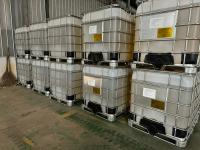
In practical operation, CYFLOC™ HX-600 is supplied as an emulsion-based flocculant. Before dosing, the emulsion is inverted and diluted with condensate or weak caustic liquor to prepare a dilute polymer solution. The solution is then introduced into the feed stream, often using dual-point addition where part of the polymer is injected into the feed pipeline and the remainder into the settler feedwell. This dosing strategy promotes rapid polymer dispersion and maximizes contact between the polymer and suspended solids.
Typical dosage depends on ore mineralogy and process conditions. Historical product guidance indicates approximately 150–350 g per tonne of dry red mud for primary settlers and 10–200 g per tonne for each CCD thickener, although the optimum dosage is determined through plant trials and laboratory settling tests. The exact consumption varies with bauxite composition, slurry density, particle size distribution, and operating temperature.
The use of CYFLOC™ HX-600 provides several operational benefits. Settling rates increase significantly, allowing higher thickener throughput and improved plant capacity. Overflow clarity is enhanced, reducing suspended solids entering downstream filtration systems. Better mud compaction results in higher underflow density and more efficient water recovery. Improved clarification also reduces caustic losses, lowering operating costs while increasing overall alumina recovery. These benefits contribute directly to higher refinery efficiency and lower environmental impact.
Compared with traditional starch/polyacrylate systems, CYFLOC™ HX-600 offers simplified chemical handling because a single high-performance product can often replace multiple reagents. The hydroxamated polymer provides excellent settling performance without the need for starch additives in many applications. This simplifies storage, preparation, and dosing while improving process consistency and reducing operational complexity.
Beyond red mud clarification, the CYFLOC™ HX family has become one of the industry's best-known technologies for mineral solid-liquid separation. Syensqo states that the HX family is designed specifically for alumina processing, providing rapid settling, reduced suspended solids in decanter and washer overflows, improved liquor filtration, and the ability to process ores that conventional polyacrylate flocculants cannot efficiently handle.
In summary, CYFLOC™ HX-600 is a specialized anionic hydroxamated polyacrylamide emulsion flocculant developed for the aluminum industry. Its primary applications include red mud clarification, primary settlers, CCD mud washing circuits, red mud thickening, overflow clarification, and caustic recovery in Bayer-process alumina refineries. By combining the bridging capability of high-molecular-weight anionic polyacrylamide with hydroxamate functional groups that selectively adsorb onto mineral particles, CYFLOC™ HX-600 delivers faster settling, denser mud compaction, clearer overflow liquor, improved filtration efficiency, higher alumina plant productivity, and lower overall operating costs, making it one of the benchmark flocculant technologies for modern aluminum processing plants.
146_small.jpg "High Quality Anionic flocculant used in mineral processing")