Anionic polyacrylamide capable of withstanding high-temperature and high-salinity (HTHS) conditions is a specially designed flocculant and mobility-control polymer used in demanding environments where conventional anionic polyacrylamide would hydrolyze, degrade, or lose viscosity. Standard anionic polyacrylamide performs well in moderate water chemistry, but under HTHS conditions—such as temperatures above 80–120°C and salinity exceeding 50,000–200,000 ppm TDS—polymer chains may break down due to thermal degradation, hydrolysis acceleration, and salt-induced viscosity loss. Therefore, HTHS-resistant anionic polyacrylamide is typically modified with temperature- and salt-tolerant monomers such as ATBS (2-acrylamido-2-methylpropane sulfonic acid) or AMPS, or synthesized with controlled molecular architecture to enhance backbone stability.
The application of HTHS-resistant anionic polyacrylamide is particularly important in oil and gas production, especially in enhanced oil recovery (EOR). In polymer flooding operations, the objective is to increase the viscosity of injected water to improve sweep efficiency and reduce the mobility ratio between water and oil. Reservoirs characterized by high formation temperature and high salinity brine require polymers that maintain viscosity under extreme conditions. HTHS anionic polyacrylamide retains molecular integrity and solution viscosity even in the presence of divalent ions such as calcium and magnesium. As a result, it improves oil displacement efficiency, reduces water channeling, and enhances ultimate oil recovery. Offshore reservoirs and Middle Eastern oilfields with high-temperature carbonate formations frequently rely on HTHS polymer systems to maintain long-term stability and performance.
In drilling fluid systems, HTHS-resistant anionic polyacrylamide is used as a shale inhibitor, viscosity modifier, and fluid-loss reducer. High-temperature downhole environments combined with saline formation water can rapidly degrade conventional polymers. However, HTHS anionic polyacrylamide maintains rheological properties, stabilizes borehole walls, and prevents clay swelling. In deep wells exceeding 3,000 meters, bottom-hole temperatures can surpass 150°C. Under these conditions, polymer stability is critical to maintain cuttings suspension and reduce filtration loss. The sulfonated groups in HTHS formulations provide resistance to thermal hydrolysis and salt precipitation, ensuring reliable performance during extended drilling operations.
Another key application of HTHS-resistant anionic polyacrylamide is in fracturing fluids. Hydraulic fracturing often involves high reservoir temperatures and brines containing high dissolved solids. Polymer-based fracturing fluids must maintain viscosity to transport proppants effectively into fractures. HTHS anionic polyacrylamide offers improved thermal stability and shear resistance, ensuring proppant placement and fracture conductivity. Additionally, its improved tolerance to salinity reduces the need for freshwater, enabling operators to use produced or brackish water for fracturing, thereby lowering operational costs and environmental impact.
In produced water treatment, oilfields generate large volumes of high-salinity wastewater containing suspended solids and residual oil droplets. The application of HTHS anionic polyacrylamide as a flocculant enhances solid-liquid separation even in saline conditions. Conventional flocculants may lose effectiveness due to charge shielding by dissolved salts, but HTHS-modified polymers maintain bridging capability and floc strength. This results in improved clarification, reduced turbidity, and better downstream filtration performance.
HTHS-resistant anionic polyacrylamide also plays a role in mineral processing operations where high-temperature process water or saline tailings streams are encountered. In some metal extraction processes, recycled water accumulates dissolved salts, reducing flocculation efficiency of standard polymers. HTHS polymers maintain adsorption and bridging performance under these challenging chemistries. Applications include thickening of tailings, clarification of overflow water, and enhancement of filtration efficiency. In copper and iron ore operations located in arid regions where water recycling is essential, salt concentration can increase over time, making HTHS polymer selection critical.
In geothermal energy operations, high-temperature brines containing dissolved salts present extreme environments for chemical additives. HTHS-resistant anionic polyacrylamide can be used for scale control, particle aggregation, and clarification of geothermal fluids before reinjection or discharge. The polymer’s resistance to thermal degradation ensures longer service life and stable performance under geothermal conditions.
Environmental remediation projects may also benefit from HTHS anionic polyacrylamide. In saline soil stabilization or tailings pond management where elevated temperatures occur due to solar exposure or exothermic reactions, HTHS polymers provide stable binding and sedimentation properties. They assist in erosion control, dust suppression, and stabilization of fine particles in harsh environments.
From a chemical perspective, the enhanced performance of HTHS-resistant anionic polyacrylamide is achieved through structural modification. Incorporating sulfonic acid groups increases tolerance to divalent cations and improves hydration in saline solutions. Controlled molecular weight distribution and backbone stabilization reduce chain scission at elevated temperatures. Some formulations include co-monomers that enhance hydrolytic resistance, allowing the polymer to maintain viscosity and charge density over extended periods.
Operational considerations for HTHS anionic polyacrylamide include proper hydration procedures, optimized dosage through laboratory testing, and compatibility assessment with reservoir or process water. Because salinity and temperature affect polymer conformation and solution behavior, pilot testing is often required to determine optimal concentration and injection parameters. Additionally, oxygen scavengers or stabilizers may be used to minimize oxidative degradation during storage and injection.
In summary, the application of anionic polyacrylamide capable of withstanding high-temperature and high-salinity conditions is critical in industries where conventional polymers fail. Its major uses include enhanced oil recovery, drilling fluids, fracturing fluids, produced water treatment, mineral processing in saline systems, geothermal operations, and environmental stabilization projects. By maintaining viscosity, charge density, and structural integrity under extreme HTHS environments, this advanced anionic polyacrylamide provides reliable performance, improved operational efficiency, and long-term economic benefits in challenging industrial applications.

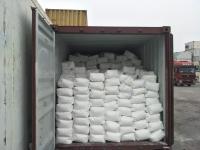
585_small.jpg "Anionic polyacrylamide be capable of withstanding high-temperature and high-salinity (HTHS)")



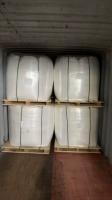
184_small.jpg "Temperature tolerant and salt resistant anionic polyacrylamide(PHPA POLYMER)")