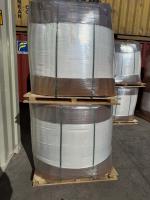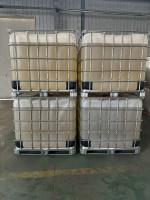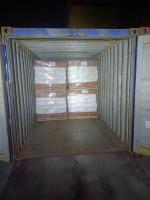


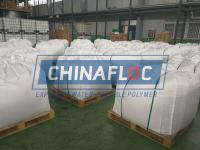
Anionic polyacrylamide A1216 is a high-molecular-weight anionic flocculant widely used in rock phosphate beneficiation plants for solid-liquid separation, tailings settling, desliming, and water clarification. In phosphate ore processing, large volumes of slurry containing fine clay, silica, and calcium minerals must be treated efficiently, and A1216 plays a critical role in improving settling speed, water recovery, and plant productivity.
Rock phosphate beneficiation usually includes crushing, washing, desliming, flotation, thickening, filtration, and tailings disposal. During these processes, fine particles remain suspended in water, making separation difficult. A1216 anionic polyacrylamide is used as a flocculant to aggregate these fine particles into large flocs, allowing them to settle quickly.
1. Characteristics of Anionic Polyacrylamide A1216
A1216 is typically a high molecular weight, medium-charge anionic polyacrylamide, designed for mineral processing and tailings thickening.
Main characteristics:
-
High molecular weight (usually 12–18 million)
-
Medium anionic charge (10–25%)
-
Strong bridging ability
-
Fast floc formation
-
Good shear resistance
-
Suitable for high-solid slurry
These properties make A1216 suitable for phosphate beneficiation where slurry contains:
-
Clay minerals
-
Quartz
-
Carbonates
-
Apatite particles
-
Fine slimes
Because most phosphate slurries have positively charged or weakly negative particles, anionic flocculants like A1216 can adsorb onto the particle surface and form bridges between particles, creating large, dense flocs.
2. Application in desliming process
In rock phosphate beneficiation, the desliming stage removes very fine clay and slime before flotation. If slime is not removed, flotation efficiency decreases.
A1216 is added to the desliming thickener to:
-
Aggregate fine clay particles
-
Increase settling rate
-
Reduce overflow turbidity
-
Improve separation efficiency
Benefits:
-
Cleaner flotation feed
-
Lower reagent consumption
-
Higher phosphate recovery
-
Less slime carryover
Without flocculant, clay particles remain suspended for long time, causing slow thickening and poor process stability.
3. Application in thickener settling
One of the main uses of A1216 in phosphate plants is in thickener settling.
After flotation, the slurry must be thickened to separate water from solids. The slurry contains very fine particles that settle slowly.
A1216 is added to the thickener feed to:
-
Form large flocs
-
Increase sedimentation speed
-
Improve overflow clarity
-
Increase underflow density
Advantages:
-
Faster thickening
-
Higher plant throughput
-
Lower water loss
-
Reduced thickener size requirement
In large phosphate beneficiation plants, thickener performance directly affects production capacity, so selecting the correct flocculant such as A1216 is very important.
4. Application in tailings treatment
Phosphate beneficiation generates large amounts of tailings containing fine particles and clay. These tailings must be settled before water can be reused.
A1216 is widely used in tailings treatment to:
-
Accelerate sedimentation
-
Improve water clarification
-
Reduce tailings pond volume
-
Increase water recycling rate
Benefits in tailings pond:
-
Faster solid settling
-
Clear supernatant water
-
Stable tailings structure
-
Reduced environmental impact
In many phosphate mines, tailings contain ultra-fine particles that are difficult to settle. High-molecular-weight anionic polyacrylamide such as A1216 is especially effective in this situation.
5. Application in process water clarification
Water reuse is very important in phosphate beneficiation plants because water consumption is high.
Process water often contains:
-
Suspended solids
-
Clay
-
Flotation reagents
-
Fine phosphate particles
A1216 is used in clarifiers to remove suspended solids.
Functions:
-
Flocculation of fine particles
-
Reduction of turbidity
-
Improvement of water quality
-
Recycling of process water
Advantages:
-
Lower fresh water consumption
-
Stable flotation conditions
-
Reduced cost
-
Better environmental compliance
Clean recycled water improves flotation performance and reduces reagent consumption.
6. Application in filtration and dewatering
After thickening, phosphate concentrate or tailings may be filtered or dewatered.
A1216 helps by:
-
Improving filterability
-
Increasing cake solids
-
Reducing moisture content
-
Increasing filtration speed
Benefits:
-
Lower drying cost
-
Higher productivity
-
Better handling of solids
-
Reduced energy consumption
In some plants, A1216 is used together with cationic flocculant for better dewatering performance.
7. Application in selective flocculation
In some rock phosphate beneficiation processes, selective flocculation is used to separate phosphate minerals from gangue.
A1216 can be used to:
-
Flocculate clay
-
Leave apatite dispersed
-
Improve flotation efficiency
This helps in:
-
Low grade ore
-
High clay ore
-
Fine particle ore
Selective flocculation improves concentrate grade and recovery.
8. Advantages of A1216 in rock phosphate beneficiation
Compared with other flocculants, A1216 has the following advantages:
-
High efficiency at low dosage
-
Strong floc formation
-
Fast settling speed
-
Good overflow clarity
-
Suitable for high-solid slurry
-
Stable performance in wide pH range
-
Good compatibility with flotation reagents
-
Reduced operating cost
Because phosphate beneficiation usually processes large volumes of slurry, using an efficient flocculant like A1216 significantly reduces total cost.
9. Typical dosage in phosphate plant
Typical dosage of A1216:
-
Thickener: 20–80 g/ton solids
-
Tailings: 30–150 g/ton solids
-
Clarifier: 5–30 ppm
-
Desliming: 10–50 g/ton solids
Actual dosage depends on:
-
Ore type
-
Particle size
-
Clay content
-
pH
-
Solid concentration
Jar test is usually required to determine best dosage.
10. Conclusion
Anionic polyacrylamide A1216 is an important flocculant used in rock phosphate beneficiation plants for desliming, thickening, tailings settling, water clarification, filtration, and selective flocculation. Its high molecular weight and anionic charge allow it to effectively aggregate fine particles, accelerate sedimentation, and improve water recovery. By using A1216, phosphate beneficiation plants can increase production efficiency, reduce water consumption, improve concentrate quality, and lower operating cost. Therefore, A1216 is widely recommended as a reliable flocculant for rock phosphate processing, especially in plants handling fine particles and high-clay ores.