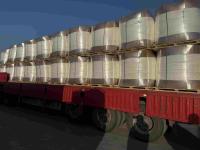
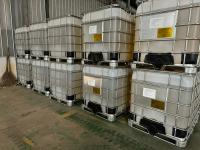
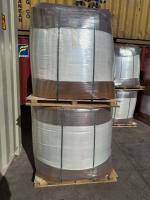
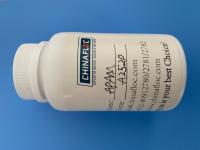
Anionic flocculant used in the quarry market plays a vital role in improving water management, solid–liquid separation, and operational efficiency in aggregate production and stone processing industries. In quarry operations, large volumes of water are used for washing, crushing, and screening materials such as sand, gravel, limestone, and granite. This generates wastewater containing fine suspended solids, which must be efficiently treated before reuse or discharge. Anionic flocculant used in the quarry market, typically based on anionic polyacrylamide (APAM), is the most effective solution for this purpose.
The main function of anionic flocculant used in the quarry market is flocculation through polymer bridging. Quarry wastewater usually contains negatively charged mineral particles such as silica, clay, and silt. Anionic polyacrylamide, although also negatively charged, has a very high molecular weight and long polymer chains. These chains adsorb onto particle surfaces and connect multiple particles together, forming large and dense flocs. This bridging mechanism is the key principle behind anionic flocculant used in the quarry market.
One of the primary applications of anionic flocculant used in the quarry market is in sand and gravel washing water treatment. During washing, fine particles are dispersed into water, creating high turbidity. By adding an anionic flocculant, these fine particles rapidly aggregate into flocs that settle quickly in sedimentation tanks or thickeners. This improves water clarity and allows for efficient recycling of process water. Therefore, anionic flocculant used in the quarry market significantly reduces freshwater consumption.
Another important application is in thickening and clarification systems. Quarry plants often use thickeners to separate solids from water. Anionic flocculant used in the quarry market enhances the settling rate of suspended solids, increasing underflow density and producing clear overflow water. This improves the efficiency of the thickening process and reduces the size and cost of equipment required.
In tailings and sludge management, anionic flocculant used in the quarry market plays a crucial role. The fine sludge generated from quarry operations can be difficult to dewater due to its high water content and small particle size. By using anionic flocculants, sludge particles form compact flocs that release water more easily. This improves the performance of dewatering equipment such as filter presses, belt presses, and centrifuges. As a result, anionic flocculant used in the quarry market reduces sludge volume and disposal costs.
Anionic flocculant used in the quarry market is also applied in settling ponds and lagoons. In many quarry operations, wastewater is directed to large ponds for natural sedimentation. However, without chemical treatment, fine particles may take a long time to settle. The addition of anionic flocculant accelerates sedimentation, improves water clarity, and reduces the footprint of settling ponds. This is particularly important in areas with limited space or strict environmental regulations.
Another key benefit of anionic flocculant used in the quarry market is its contribution to environmental compliance. Regulations often require quarry operators to discharge water with low turbidity and minimal suspended solids. By effectively removing fine particles, anionic flocculants help meet these standards and reduce environmental impact. Cleaner discharge water also protects nearby ecosystems and water bodies.
The performance of anionic flocculant used in the quarry market depends on factors such as molecular weight, charge density, dosage, and mixing conditions. High molecular weight polymers provide stronger bridging and larger floc formation. The degree of anionic charge must be optimized based on the mineral composition and water chemistry. Proper dosing and mixing ensure uniform distribution and effective flocculation.
In practical applications, anionic flocculant used in the quarry market is often prepared as a dilute solution and dosed into wastewater streams. Efficient mixing is essential to ensure that the polymer interacts with suspended particles. Overdosing should be avoided, as it can lead to restabilization of particles or increased operational costs.
Compared to other treatment chemicals, anionic flocculant used in the quarry market offers several advantages. It requires relatively low dosage, produces large and fast-settling flocs, and improves dewatering efficiency. It is also compatible with inorganic coagulants, which can be used as pretreatment in some cases.
Additionally, anionic flocculant used in the quarry market contributes to cost savings and process optimization. By improving water recycling, it reduces the need for freshwater intake. By enhancing sludge dewatering, it lowers transportation and disposal costs. These benefits make it an essential chemical in modern quarry operations.
In conclusion, anionic flocculant used in the quarry market is a highly effective solution for water treatment, solid–liquid separation, and sludge management. Its strong bridging ability, high efficiency, and adaptability to different mineral systems make anionic flocculant used in the quarry market indispensable in sand and aggregate processing. As environmental regulations become stricter and water conservation becomes more important, the role of anionic flocculant used in the quarry market will continue to grow in importance.